Gold Prices on July 5, 2026: Losses Despite Significant Increase
On July 5, 2026, gold prices saw a notable increase, yet investors reported losses due to high buy-sell
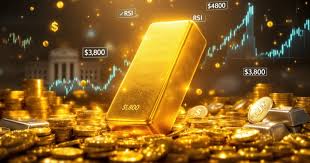
The gold market is currently experiencing significant turmoil, with prices dropping sharply. In stark contrast, China is maintaining a strategy that suggests a long-term investment in gold, revealing its intentions to build reserves amidst the chaos.
Just a few months ago, gold was one of the most sought-after investment channels in China, with citizens eagerly lining up to purchase it, believing that prices would continue to rise. However, a recent sharp correction has reversed this trend, with jewelry prices at major brands like Chow Tai Fook and Chow Sang Sang dropping nearly 30% from their peak earlier this year. Many buyers who purchased at high prices are now facing substantial losses.
The wave of selling has been fueled by investor sentiment that the gold price increase cycle has ended. Observers note that there are two distinct flows of money in the Chinese gold market, representing entirely opposite mindsets. On one side are short-term investors who react almost immediately to signals from the U.S. Federal Reserve. When Fed Chairman Kevin Warsh issued a tough message regarding interest rates, these investors quickly sold their gold, believing that the precious metal loses its appeal in a high-interest-rate environment.
Conversely, central banks, particularly in China, seem to ignore the 20-30% fluctuations in gold prices. For them, gold is no longer just an investment asset but a strategic reserve tool aimed at reducing dependence on the U.S. dollar and mitigating geopolitical risks. One group is selling out of fear, while the other is quietly buying with a long-term vision.
As the market fluctuates, major Chinese commercial banks are not encouraging trading but are actively tightening speculative activities. The Industrial and Commercial Bank of China (ICBC), the world's largest bank by total assets, announced it would completely end gold trading services linked to the Shanghai Gold Exchange for individual customers starting July 24. Shortly after, the China Construction Bank (CCB) made a similar decision. Additionally, Ping An Bank and several others have raised margin requirements and reduced trading limits to diminish the appeal of leveraged speculative activities.
Experts believe these moves are not aimed at influencing gold prices but rather at limiting risks for individual investors, who are the most vulnerable when the market turns. Meanwhile, the People's Bank of China (PBOC) continues on a different path, having bought gold for the 19th consecutive month and even accelerating its accumulation during the price correction in April, with net purchases reaching 8.1 tons—the highest since December 2024.
The central bank's strategy is clear: buy more when prices drop and limit purchases when prices rise. Unlike the typical 'buy high' mentality seen among individual investors, the PBOC views gold as a long-term reserve asset, essential for national financial security amid increasingly unpredictable global economic and geopolitical conditions.
According to experts speaking to CCTV, the current correction is not sufficient to conclude the 'super cycle' of gold price increases. For the long-term upward trend to truly end, three conditions must be met: the Fed must maintain high interest rates for several years, the U.S. must effectively address its budget deficit, and the global financial order must revert to a state where the U.S. dollar dominates absolutely. Currently, none of these three factors are in place.
Thus, observers suggest that recent developments are not merely a price drop but reflect a shift in how the market values the precious metal. Whereas gold previously fluctuated primarily based on Fed monetary policy, the market is now influenced by two parallel forces: short-term speculative money chasing interest rates and the strategic money of central banks aimed at geopolitical restructuring.