Vietnam s Approach Initiatives in Maritime Security Highly Evaluated by Int l Press
Given the fact that Vietnam has taken the lead in addressing the challenges regarding the South China Sea,
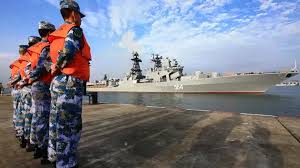
U.S. Ambassador to the United Kingdom, Warren Stephens, has raised alarms regarding China's increasing dominance over global waterways, labeling it a significant threat that cannot be overlooked. Speaking to the International Maritime Organization Council, he emphasized that China's strategy involves transforming ports and shipping routes into instruments of geopolitical leverage.
Stephens stated, "I spoke about a challenge that we cannot afford to ignore: China's systematic effort to use maritime power as an instrument of political coercion." He highlighted China's aggressive acquisition of port concessions and infrastructure worldwide, asserting that these moves are not merely for commercial gain but are aimed at extending China's strategic reach and weaponizing access against sovereign nations.
In his remarks, Stephens underscored the United States' role as a vital player in global maritime affairs, noting that the U.S. Maritime Transportation System supports approximately $5.4 trillion in economic activity and nearly 30 million jobs annually. He declared, "We are not a passive observer of maritime affairs," reinforcing America's commitment to maintaining maritime security.
The warning coincides with former President Donald Trump's renewed focus on Greenland, which he argues is crucial for U.S. security due to its strategic location between the Arctic and North Atlantic. Trump has expressed that Greenland should be controlled by the U.S. rather than Denmark, citing the presence of Chinese and Russian ships in the region.
Stephens pointed to recent developments in Panama, where the Supreme Court ruled against Chinese port concessions, as a cautionary tale for other nations. He warned that allowing foreign powers to control critical port infrastructure poses significant vulnerabilities.
He urged member states of the IMO to scrutinize agreements that permit foreign entities, especially state-linked enterprises, to manage essential port facilities. "Transparency, the rule of law, and genuine sovereignty are not obstacles to commerce; they are its foundation," he stated.
Furthermore, Stephens reiterated the U.S. commitment to maritime security, sanctions enforcement, and the protection of flag state rights. He cautioned that a free and open ocean is not guaranteed and must be actively defended against coercive actions.
China has consistently rejected U.S. claims that its overseas investments are coercive, framing its initiatives as commercial partnerships that foster global trade and development. However, Stephens' remarks reflect a growing concern among U.S. officials regarding the implications of China's maritime ambitions on global security.