Ho Chi Minh City Prepares for 50th Anniversary Celebration
Ho Chi Minh City is gearing up for a significant celebration marking the 50th anniversary of the city being
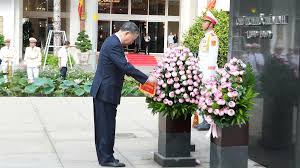
On the morning of July 2, Ho Chi Minh City held a ceremony to commemorate the 50th anniversary of the city being named after President Ho Chi Minh, reflecting on the development journey of the largest city in Vietnam. The event was attended by leaders and former leaders of the Party and State, as well as representatives from various diplomatic agencies and local heroes.
This significant political event is part of a series of activities marking the 50th anniversary of the official renaming of Saigon-Gia Dinh to Ho Chi Minh City, which took place on July 2, 1976. During the ceremony, General Secretary and President To Lam laid flowers at the statue of President Ho Chi Minh located on Nguyen Hue Walking Street.
In his commemorative speech, Secretary of the Ho Chi Minh City Party Committee Tran Luu Quang expressed that the city's name is a sacred honor and a responsibility to the Party, the people, and history. He emphasized that after half a century, Ho Chi Minh City has every reason to be proud of its achievements but must not be complacent with past successes. The title of Ho Chi Minh City is not only a reward for the past but also a reminder for the present and a commitment to the future.
Quang stated that the city must realize the aspirations and desires of President Ho Chi Minh through new achievements, values, and contributions. Following its merger with Binh Duong and Ba Ria-Vung Tau, Ho Chi Minh City has greater space and motivation for development, necessitating concrete results in economic growth, urban governance, and improving citizens' lives.
He remarked, "The greater the aspiration, the stronger the will; the higher the responsibility, the greater the determination," affirming that Ho Chi Minh City will continue to play a leading role in building a civilized, modern, and compassionate urban environment.
The renaming of the city occurred during the first session of the sixth National Assembly, which decided to officially change the name from Saigon-Gia Dinh to Ho Chi Minh City, shortly after the country was named the Socialist Republic of Vietnam. This decision reflected the sentiments and aspirations of the people nationwide and recognized the contributions and sacrifices of the region in various wars.
The idea of naming the city after President Ho Chi Minh was proposed as early as August 25, 1946, when representatives from the southern region suggested to the National Assembly and Government to change the name to Ho Chi Minh City. After 30 years, following two wars against France and the United States, this aspiration became a reality.
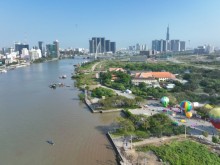
Over the past half-century, Ho Chi Minh City has transformed from a war-torn urban area to the economic locomotive of the country, significantly contributing to the national budget and initiating many innovative economic and urban management mechanisms. The city has maintained high growth rates over various periods, shifting strongly towards services, high-tech industries, and the digital economy, while developing industrial parks and new urban areas.
In addition to economic development, Ho Chi Minh City has focused on social welfare, poverty reduction, urban renovation, housing improvement, cultural preservation, and the establishment of the Ho Chi Minh Cultural Space. In recent years, the city has been granted several special mechanisms for development, and the implementation of a two-tier local government model, along with the merger with Binh Duong and Ba Ria-Vung Tau, has opened a new development phase for the metropolis of over 14 million residents.