The End of Speculation in Vietnam's Resort Real Estate Market
Vietnam's resort real estate market is undergoing a significant transformation, moving away from speculative
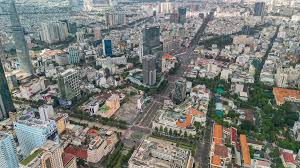
The Vietnamese real estate market is witnessing a transformation as capital flows remain strong but are changing direction. According to Ngo Thanh Huan, CEO of FIDT, the liquidity foundation of the economy is robust, with household deposits exceeding 10.5 quadrillion VND and credit growth projected to reach 17-18% this year, surpassing the operational target of around 15%.
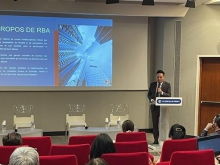
During a recent seminar on the real estate market for the latter half of the year, Huan emphasized that while money is not lacking, the movement of capital is evolving. Investors are now more selective, focusing on properties that can generate real income rather than those based solely on speculative trends.
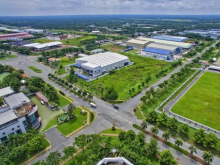
This shift is evident in the behavior of investors, who are now prioritizing areas with industrial zones that create jobs and rental opportunities. The market is moving away from pure speculation towards assets with clear infrastructure and legal frameworks.
Data from the Vietnam Real Estate Brokerage Association (VARS) shows that the volume of real estate transactions remains significant. In 2025, the market is expected to see over 150,000 new real estate products and more than 100,000 successful transactions. In the first half of this year alone, around 60,000 products were launched, with 35,000 transactions completed, indicating a 58% absorption rate.
Despite a decrease in absorption rates compared to previous periods, the substantial number of transactions reflects that capital is still circulating, albeit more concentrated in specific asset groups. A survey by OneHousing revealed that 41% of potential buyers plan to purchase real estate within the next 6-12 months, indicating a significant amount of capital is waiting for the right opportunity rather than exiting the market.
In terms of market dynamics, the absorption structure highlights this trend. Do Thi Huong, Director of the Residential Business Department at Savills Vietnam, noted that about 80% of transactions in Hanoi are concentrated in mid-range and affordable apartments, while high-end apartments account for a smaller share. Similarly, in Ho Chi Minh City, over 90% of absorption is focused on mid-range and affordable units.
This trend indicates that investors are prioritizing affordable products that meet real housing needs and are easier to exploit, rather than focusing on highly speculative assets.
Tran Quang Trung, Business Development Director at OneHousing, pointed out that the real estate market in the second half of the year is entering a phase of major projects and significant restructuring. Unlike before, where having land was sufficient to develop a project, factors such as financial capacity, implementation ability, cash flow management, and customer understanding are now crucial.
Furthermore, buyer behavior is changing. Customers are now more concerned with travel time rather than distance when evaluating properties, making areas connected to infrastructure like metro lines and ring roads more attractive, particularly in satellite cities.
From a macro perspective, Nguyen Van Dinh, President of the Vietnam Real Estate Brokerage Association, stated that the demand for real estate is no longer as lenient as before, focusing instead on properties with transparent legal status, reasonable costs, and good commercial value. Apartments continue to lead liquidity, while well-planned low-rise urban areas remain appealing.
In contrast, products heavily reliant on price appreciation expectations or lacking resident foundations struggle to attract capital. Huan reiterated that the new growth drivers in real estate are closely linked to industrialization and foreign direct investment (FDI). As companies expand production in Vietnam, labor demand increases, leading to population growth and housing needs in surrounding areas.
Regions with industrial foundations, such as Bac Ninh, Binh Duong, and Hai Phong, are seeing more stable exploitation rates supported by rental income and real housing demand. Overall, experts believe the real estate market is transitioning from a phase of speculative growth to selective growth, with capital reallocating into assets with practical and commercial value linked to developed infrastructure.
This shift suggests that short-term investment strategies are likely to decline, making way for long-term holding strategies that focus on cash flow generation, aligning better with the new development cycle of the market.