Nepal Races to Rescue Over 900 Trapped in Hydroelectric Tunnels
Rescue teams in Nepal, aided by experts from China and India, are urgently working to reach over 900
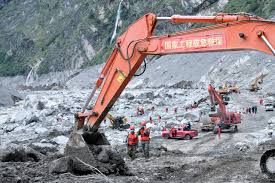
Nepal is urgently seeking $20 million in support from international funds to address the extensive losses and damages caused by severe flooding that occurred at the end of August. This natural disaster has tragically claimed the lives of over 1,300 individuals, with more than 5,500 still unaccounted for after 12 days of search efforts.
The flooding was initiated by the collapse of a glacier in the Tibetan region of China and Nepal, leading to devastating landslides and flash floods. Nepal's Foreign Minister Shisir Khanal described the floods as a "tsunami from the Himalayas," with water and debris reaching heights of 18 to 21 meters and moving at speeds of nearly 180 km/h. Many towns and roads were swept away, and some areas remain isolated.
Scientists have pointed to climate change as a contributing factor to this disaster, with the Himalayas warming at a rate nearly 50% faster than the global average. Despite contributing less than 0.1% to global greenhouse gas emissions, Nepal is bearing the brunt of climate impacts. Minister Khanal has called on major polluting economies to share responsibility, emphasizing that this disaster serves as a stark warning of the escalating effects of climate change on vulnerable nations.
The estimated total damage from the floods could exceed $5 billion, with over 20,000 homes and numerous transportation routes needing reconstruction. The Nepalese government has submitted a request to the United Nations Loss and Damage Fund for $20 million to aid recovery efforts related to climate change. While Khanal acknowledged that this amount is "clearly insufficient" compared to the actual damage, he hopes it will encourage the international community to establish a more robust support mechanism for small and vulnerable economies.
Khanal stressed that the international community should not view this as an isolated disaster but rather in the broader context of climate change in the Himalayas, warning that similar disasters could occur more frequently in the future.
In the aftermath of the flooding, Nepalese citizens are mourning their loved ones, with thousands still awaiting news of the missing. The United Nations Loss and Damage Fund is currently facing a significant financial shortfall, with 119 countries requesting a total of $2.8 billion, while contributions have only reached around $400 million. The U.S. has only contributed $17 million since President Donald Trump withdrew from the Paris Agreement on climate change.
Khanal acknowledged that Nepal will face "political challenges" in securing climate support but emphasized that funding is essential not only for emergency relief but also for future risk prevention and mitigation. He dismissed accusations that China failed to adequately warn or share data prior to the disaster, stating that discussions are ongoing to enhance coordination and data sharing in the Himalayan region. Both Nepal and Chinese scientists were unaware of the imminent glacier collapse.