Biochar remains an untapped resource
(VAN) Biochar must be included in an appropriate policy framework in order to maximize its potential and
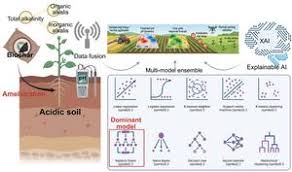
Artificial intelligence (AI) is poised to revolutionize the way biochar is used to restore acidic agricultural soils, according to a new review published in the journal Biochar. The study highlights the potential of AI to enhance predictions about how biochar can effectively ameliorate soil acidity, a growing concern that threatens agricultural productivity worldwide.
Soil acidification can lead to the loss of crucial nutrients like calcium and magnesium, while increasing the toxicity of aluminum and heavy metals. These changes can hinder root growth and disrupt soil microbial communities, ultimately reducing crop yields. Biochar, a carbon-rich material produced from organic matter, offers a promising solution by raising soil pH and improving nutrient retention and water-holding capacity.
The authors of the review, including corresponding author Ren-kou Xu, emphasize that while AI presents a powerful tool for connecting the complex properties of biochar with soil conditions, the success of AI models depends on the quality of data and the biological relevance of the mechanisms they are based on. Current predictive models often treat total alkalinity in biochar as a single variable, which can limit their interpretability. The review suggests that distinguishing between organic and inorganic sources of alkalinity in biochar is crucial for more accurate predictions.
Furthermore, the study points out that ensemble machine-learning approaches, such as Random Forest, have become dominant in predicting biochar performance due to their ability to handle complex datasets and capture nonlinear relationships. However, the authors caution that no single algorithm is universally superior; model selection should be tailored to the specific data and problem at hand.
Looking ahead, the researchers propose integrating various data sources, including remote sensing, soil sensors, and microbial datasets, to create a comprehensive model that better represents the biochar-soil-microbe-plant system. The goal is to develop interpretable AI models that can explain why certain biochars work in specific soils, aiding in the identification of the most effective treatments before field application.
The authors call for standardized benchmark datasets and improved collaboration among soil scientists, sensing specialists, and AI researchers to advance the integration of AI in biochar management. By combining AI with causal inference and established chemical and biological mechanisms, the study argues that AI can evolve from a correlation-based prediction tool into a practical platform for precision management of acidified agricultural soils.