Dubai Beats The Heat By Making Fake Rain
Dubai has made its own rain using technology to cool down the 50 degree-Celsius heatwave.
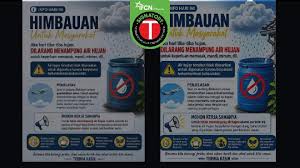
Recent advisories circulating on social media have urged residents in Indonesia to avoid collecting rainwater produced by weather modification operations, claiming potential contamination with harmful chemicals. These claims have sparked concerns about the safety of using this rainwater for cooking, bathing, or drinking.
The Indonesian government employs weather modification techniques, such as cloud seeding, primarily to combat forest and land fires and to alleviate the effects of drought. However, the validity of these health concerns has been called into question.
Weather modification refers to methods used to alter weather conditions temporarily without changing the climate permanently. I Putu Santikayasa, from IPB University, explains that the most common method, cloud seeding, involves using salt to encourage rain by accelerating condensation in clouds. Other methods, like cloud breaking, aim to reduce rainfall intensity.
Weather modification has been practiced in Indonesia since 1977, initially to support agriculture and fill reservoirs. In recent years, it has been increasingly utilized for disaster mitigation in response to rising hydrometeorological disasters.
Research conducted by the Meteorology, Climatology, and Geophysics Agency (BMKG) indicates no significant health or environmental impacts from weather modification operations. A team from BMKG tested water samples from various locations before, during, and after these operations, measuring parameters such as pH and the presence of various ions.
The results showed that the pH of the rainwater was neutral to alkaline, indicating it was safe for use. The water quality was found to meet the standards set by government regulations, which classify water into different categories based on its intended use.
The World Meteorological Organization (WMO) has also reported no significant health risks associated with the use of common seeding agents like silver iodide. However, they caution that any new materials or increased quantities used in seeding should be evaluated for their potential impacts.
The claims that rainwater from weather modification operations is hazardous lack substantiation. Current studies suggest that this rainwater does not pose a significant health risk, and further research is necessary to continue monitoring its safety.