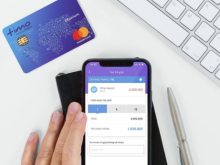
Police to Investigate Suspicious Bank Transactions
The Vietnamese police have announced plans to investigate bank accounts involved in suspicious money
The police have recently alerted the public about the growing risks associated with bank accounts as criminal activities become increasingly sophisticated. According to the Economic Security Department of the Ministry of Public Security, the misuse of bank accounts for illegal activities is becoming more organized and cross-border, leading to significant financial losses.
Notably, following Cambodia's crackdown on several international fraud networks, some criminals have shifted their operations to Vietnam. As digital technology advances, offenders are increasingly utilizing Mobile Banking, Internet Banking, e-wallets, and online platforms to commit fraud, launder money, evade taxes, and transfer money illegally.
Common tactics include using fake documents to open accounts, buying, renting, or borrowing accounts, and employing intermediary accounts to circulate and legitimize illegal funds. In light of this situation, the police recommend that individuals and businesses enhance their legal compliance awareness to avoid potential legal risks associated with bank account misuse.
The police emphasize that the act of lending, renting, or selling personal information carries serious consequences. When suspicious transactions arise, such as fraud cases or payment disputes, the account holder may need to explain their account registration and usage to authorities. Information such as identification numbers, phone numbers, email addresses, facial recognition data, bank accounts, e-wallets, or international payment accounts can all serve as evidence for verifying related responsibilities.
Therefore, citizens are urged to be particularly cautious to prevent unnecessary repercussions. If an individual knowingly provides information for illegal purposes, registers, activates, or allows others to use their account, they may face administrative penalties or criminal charges depending on the severity of the violation.
Under the Anti-Money Laundering Law of 2022, lending, renting, or selling accounts to conceal the origins of money obtained through criminal activities is strictly prohibited. Additionally, Decree No. 88/2019/ND-CP, amended by Decree No. 143/2021/ND-CP, imposes severe penalties for violations in the monetary and banking sectors, including strict penalties for renting, lending, or selling payment accounts. Furthermore, the Penal Code of 2015 (amended in 2017) outlines various offenses related to fraud, computer and telecommunications crimes, and money laundering. Depending on the nature and severity of the violation, account holders may face criminal prosecution.
In light of these developments, banks are urgently warning about new money transfer scams. It is important to note that no legitimate employment opportunity begins with transferring money to individuals via social media platforms like Facebook or Zalo.