Reopening of Appeal in Vũ Linh's Estate Dispute
The High People's Court in Ho Chi Minh City will reopen the appeal hearing regarding the estate dispute of
In a significant legal case in Phu Tho province, an elder daughter-in-law, Dao Thi Hue, aged 70, has initiated a lawsuit seeking to reclaim a portion of land inherited from her deceased in-laws. This dispute arises from a will that was lost for 15 years, which stipulated that all property should be passed on to the eldest son. Upon its rediscovery, the land had already been divided and registered under the names of her husband's younger brothers.
The case, which is currently being reviewed by the People's Court of Phu Tho province, involves a total of 9,000 square meters of land that was originally allocated to the family for management and cultivation. The land was inherited from Hue's father-in-law, who had six children, including her husband, Du, who has since passed away. After the death of his wife, the father made a will in 2006, designating all assets to his eldest son, Du, to uphold family responsibilities. However, this will was lost and only rediscovered in June 2021.
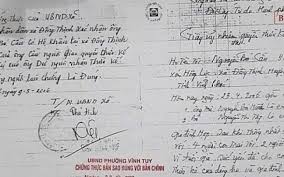
In 2017, under pressure from his younger brothers, Du held a family meeting to divide the inheritance, which resulted in the transfer of ownership of the land to his brothers, Vien and Luc. The court has noted that the division of property was not publicly announced, although it was certified by local authorities. Subsequently, in 2019, land use certificates were issued for portions of the land to Luc and Vien.
During the trial, Hue argued for the recognition of the original will and requested the court to invalidate the family meeting's decisions from 2017, as well as the land certificates issued to her brothers-in-law. The defense contended that the will was never formally acknowledged, and the land division was agreed upon by all siblings at the time.
The court found that while the land was originally intended for Du, the subsequent agreements made by the siblings were valid and recognized by local authorities. It ruled that Hue and her son would receive a portion of the land, specifically 2,000 square meters, but noted that this would not include residential land, which was a point of contention for Hue.
Hue and her son have expressed dissatisfaction with the ruling, claiming that the allocated land does not provide adequate space for ancestral worship, which is a significant cultural practice in their family. They plan to appeal the decision, as the case continues to highlight the complexities of inheritance laws and family dynamics in Vietnam.