Will the Boeing 777X Face Airport Bans Like the Airbus A380?
As Boeing prepares to launch the 777X, questions arise about its potential airport bans, similar to the
The Boeing 777X program, launched in November 2013, was designed to be the most efficient twin-engine widebody aircraft ever built. Powered exclusively by the GE9X engine, the 777X aims to achieve a 10% reduction in fuel burn compared to its predecessor, the Boeing 777-300ER, while accommodating up to 426 passengers in a two-class configuration and flying over 7,200 nautical miles (13,334 km). However, despite its ambitious goals, the aircraft remains uncertified, marking it as one of the longest-delayed commercial aviation programs in Boeing's history.
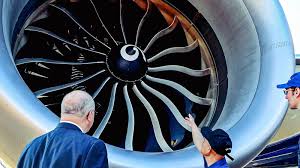
The GE9X engine is a key component of the 777X, engineered to operate under extraordinary temperatures and pressures. It is designed for greater thermal efficiency, with internal components capable of withstanding temperatures exceeding 2,400 degrees Fahrenheit (1,315°C). This high-performance engine utilizes advanced ceramic matrix composites, fourth-generation carbon-fiber fan blades, and features the largest fan ever fitted to a commercial aircraft at 134 inches (3.4 meters).
One of the significant challenges faced by the GE9X is maintaining the reliability of its components in such extreme conditions. A recent durability issue related to an internal seal has raised concerns, though the engine manufacturer has assured that this problem does not impact the certification or entry into service of the 777X.
The GE9X is not only the most powerful commercial aircraft engine ever developed, with a certified thrust rating of 110,000 pounds-force (490 kN), but it also holds a Guinness World Record for surpassing 134,300 pounds-force (597 kN) during testing. The engine's design includes a high-pressure compressor that achieves a pressure ratio near 27:1, contributing significantly to its efficiency.
However, the pursuit of efficiency has led to increased stress on internal components, making durability validation crucial. The engine's thermal environment is significantly different from earlier commercial turbofans, with temperatures in the combustor and high-pressure turbine sections reaching levels that can melt many structural metals used in aerospace manufacturing.
To counteract potential material degradation, the GE9X employs a network of microscopic cooling passages that circulate compressed air through turbine blades and surrounding structures. This cooling system is vital for maintaining the engine's performance and longevity.
Despite the challenges, the GE9X represents a significant leap forward in commercial aviation engineering. It reflects a trend towards maximizing fuel efficiency while grappling with the complexities of modern engine design. As the aerospace industry continues to push the boundaries of technology, the GE9X stands as a testament to the future of aviation.