President works with Dien Bien province's leaders
NDO/VNA – Dien Bien has a high poverty rate, so one of the province's important political tasks is to reduce
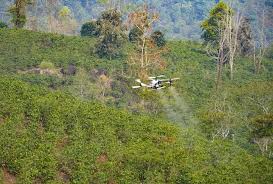
Dien Bien province in Vietnam is set to conduct a significant trial involving 6,000 drone flights as part of an initiative to boost economic development through the use of unmanned aerial vehicles (UAVs). This project, approved by the provincial government at the end of June, is the result of nearly six months of collaboration between Dien Bien, the Ministry of Science and Technology, the Ministry of National Defense, and two companies, Vietnam Post and FPT.
The primary goal of this trial is to validate three to five typical UAV application models, aiming to reduce operational time or costs by 20-30% compared to traditional methods. Nguyen Van Thuat, Deputy Director of the Department of Digital Economy and Society, emphasized that the choice of Dien Bien was not random. The province's mountainous terrain and high logistics costs, along with many remote areas lacking access to healthcare and essential goods, make it an ideal location for such trials.
Dien Bien also shares borders with Laos and China and has vast forest areas that often require monitoring for resource management, fire prevention, rescue operations, and disaster response. Thuat noted that these challenges are precisely where low-altitude space technology can significantly improve traditional management methods.
The sandbox project will focus on three main application areas: agriculture, logistics, and digital mapping. In agriculture, UAVs will be utilized for seed sowing, pesticide spraying, crop monitoring, and transporting agricultural products. In logistics, drones will facilitate the delivery of medical supplies and essential goods to remote areas. The digital mapping initiative will involve terrain monitoring, forest management, resource oversight, disaster warning systems, and public service support.
The sandbox framework allows for controlled exemptions, enabling technology companies, particularly domestic UAV manufacturers, to research and refine their technologies in real-world conditions. Specifically, companies may receive exemptions or flexible applications concerning two minimum flight conditions, reducing 60 out of 69 testing requirements related to frequency, electromagnetic compatibility, and other quality assessments.
Thuat stated that Dien Bien is the first province to establish a sandbox mechanism for digital technology. The results from this project will serve as a reference for refining national policies on low-altitude economic development. He noted that low-altitude space economy is emerging as a new growth driver, with countries like China recognizing it as a strategic economic sector. The United States, Japan, South Korea, and many European nations are also experimenting with new service models based on low-altitude vehicles.
These countries are not only developing drone technology but are also building industrial ecosystems and services around it. Thuat remarked that UAVs are merely a tool, while the economic value lies in the technology ecosystem, data, and accompanying services. This approach aligns with the Ministry of Science and Technology's strategy for developing low-altitude economic sectors in Vietnam.
At a recent press conference, Deputy Minister of Science and Technology Bui Hoang Phuong highlighted that the sandbox in Dien Bien demonstrates that legal regulations for testing new models exist, even in complex fields like UAVs. The framework is comprehensive, and the remaining challenge is effective implementation.