Kiev Shaken by Russian Missile Strikes, Casualties Reported
Kiev was rocked by a series of Russian missile attacks, resulting in significant destruction and at least
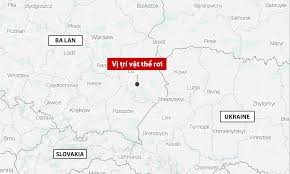
A recent incident involving a Russian missile has sparked concerns over Poland's air defense system. On July 30, a Russian Kh-101 cruise missile flew nearly 100 km into Polish airspace without being shot down by Polish F-16 fighters. This breach occurred near the village of Tarnawa-Kolonia, approximately 90 km from the Ukrainian border.
Polish Defense Minister Cezary Tomczyk confirmed that an unidentified object fell in an open area, which was later identified as a Russian missile. Prime Minister Donald Tusk stated there was 'no reason to believe' that the missile was targeting Poland. The Russian Defense Ministry has not commented on the event.
The Ukrainian Air Force reported that Russia launched a massive attack on Ukraine that morning, firing 61 Kh-101 and Kalibr cruise missiles, alongside various ballistic and hypersonic missiles. The western Ukrainian province of Lviv, bordering Poland, was among the targeted areas.
In response to the threat, two F-16 fighters were dispatched from Lask Air Base at 1:59 AM. As the Polish military detected approximately 20 unidentified flying objects heading towards Poland, one missile entered Polish airspace and landed after about six minutes. The F-16s could not engage the missile in time due to legal restrictions that require pilots to visually identify a target before firing.
The missile ultimately landed in a rural area in eastern Poland, creating a 10-meter-wide crater but causing no casualties. Experts noted that the missile's flight path brought it dangerously close to major cities like Chełm, Zamosc, and Lublin.
General Ireneusz Nowak, the commander of Polish operational forces, stated that he was prepared to order the missile's interception but was constrained by the need for visual confirmation. This legal requirement complicated the response, as the F-16s needed to be within a certain range to lock onto the missile with radar.
Additionally, there were concerns about potential misidentification of Ukrainian MiG-29 fighters operating near the border. The Polish Air Force's inability to close its airspace further complicated the situation, as civilian aircraft were also at risk.
Defense analysts have pointed out that the Kh-101 missile's ability to travel 100 km in six minutes indicates that Polish forces may have detected the threat only after it had already penetrated deep into their airspace, limiting their reaction time.
As tensions continue to rise in the region, this incident underscores the importance of effective air defense systems and the need for clear protocols in identifying and responding to aerial threats.