Ukraine Launches Drone Attacks on Moscow Amid Rising Tensions
Ukraine has intensified its drone attacks on Moscow, targeting a major oil refinery in Syzran. Russian air
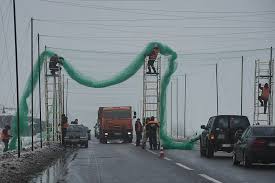
Ukraine is ramping up its defense measures to secure vital logistics routes amid escalating threats from Russian drones. The country aims to protect 4,000 kilometers of roads near the frontline this year, with a particular focus on countering the increasing use of UAVs (unmanned aerial vehicles) by Russian forces.
As part of this initiative, Ukraine has already installed UAV protection systems along more than 1,000 kilometers of key supply routes. According to the Ministry of Defense of Ukraine, the State Special Transport Agency has constructed 1,066 kilometers of UAV defense infrastructure since the beginning of 2026, following directives from the ministry. These protective nets allow vehicles to continue moving near the frontline while shielding them from drone attacks.
Russian FPV (first-person view) drones and reconnaissance UAVs have been flying over the area, targeting vehicles within a 15-30 kilometer range from the front lines, creating a dangerous "kill zone" that necessitates the deployment of protective nets over these routes. Since early June, construction teams at the frontline have added 325 kilometers of new UAV defense structures, restored over 31 kilometers, and repaired nearly 233 kilometers of roads.
The Ministry of Defense emphasizes that in modern warfare, logistics routes are a primary target for adversaries. Therefore, UAV countermeasures directly impact the ability to maintain supply lines for combat units. The protected routes enable Ukraine to transport personnel and supplies more quickly and safely, thereby sustaining operational momentum on the battlefield.
The scale of this program highlights how UAVs have profoundly changed the dynamics of rear areas close to the frontline. Ukraine is currently building its defense network at a pace of 9.2 kilometers per day in June, which is more than double the speed achieved in 2025. The goal is to have 4,000 kilometers of roadways shielded by the end of 2026, with the Kherson region accounting for 207 kilometers of this total.
Road protection efforts are being implemented alongside the deployment of vehicles and robots operating on these routes. The nets are designed to intercept FPV drones before they can reach their targets. Meanwhile, trucks, ground robots, and medical evacuation vehicles are moving along the covered sections of road. Ukraine is increasingly assigning the most dangerous tasks to machinery whenever possible.
In the first half of 2026, ground robots have completed over 66,000 logistics and evacuation missions, taking on the most hazardous supply and casualty transport tasks to keep soldiers out of harm's way. According to the Ministry of Defense, the combination of UAV defense nets and ground robots represents a structural solution for Ukraine in a battlefield where the safety of logistics routes has become a critical factor in determining the resilience of both sides.
Road repair work is also being conducted in parallel with the construction of the defense systems. Since the restoration program began in April, construction teams have repaired and maintained over 369.6 kilometers of road, with work ongoing on 16 sections and fully completed on 27 other sections.