Compensation rates approved for land along Beltway 3
HCMC – The HCMC People’s Committee has approved the land price adjustment coefficient to determine
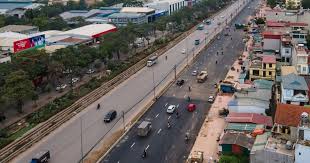
The expansion of National Route 1A in Hanoi is gaining momentum as local authorities unveil land compensation prices for affected residents. In some locations, the compensation has been set at nearly 190 million VND per square meter, prompting discussions among the community regarding the adequacy of these rates.
The project, which is part of a broader urban renovation initiative, involves the clearance of approximately 92,243 square meters of land affecting 124 households and four organizations. The route stretches about 1.49 kilometers through the Dinh Cong ward, connecting from Road 2.5 to Nguyen Huu Tho Road.
Local officials have organized meetings to inform residents about the legal documents, compensation policies, and resettlement plans associated with the project. According to the compensation framework, the land prices are based on the city’s pricing table, adjusted by a coefficient of 2 as stipulated in the resolution by the Hanoi People’s Council. For example, the compensation for land along Giai Phong Street has been reported to reach over 152 million VND per square meter, while the compensation for prime locations on Nguyen Huu Tho Street is close to 190 million VND per square meter.
In response to residents' concerns about compensation and resettlement procedures, Nguyen Tuan Anh, Chairman of the Dinh Cong People's Committee, assured that the local government would conduct transparent land allocation for resettlement and assist residents in obtaining necessary documentation for land use rights and construction permits. He emphasized that relocations would only occur once the new resettlement areas are fully equipped with essential infrastructure and facilities, ensuring improved living conditions.
Beyond Dinh Cong, land clearance efforts are also underway in other areas impacted by the project. The Hoang Liet ward, for instance, is set to reclaim over 110,000 square meters of land, directly affecting 203 households and several organizations. A dedicated task force comprising 38 members has been established to oversee the land clearance process.
During community dialogues, residents have urged city officials to ensure that compensation rates reflect current market values and to expedite the announcement of resettlement locations while maintaining or improving infrastructure in new housing areas. Nguyen Anh Tuan, the Chairman of Hoang Liet, stated that all resident feedback would be compiled for city consideration, reinforcing the local government's commitment to uphold legal standards while maximizing protections for citizens' rights and interests.
In Phu Xuyen and Dai Xuyen communes, local authorities have begun reviewing records, collecting data, and measuring land parcels within the project’s scope to accurately assess land types and usage status. This groundwork is essential for developing fair compensation and resettlement plans.
The National Route 1A expansion project, which spans approximately 36.3 kilometers and traverses 18 wards and communes in Hanoi, is designed with a cross-section of 90 meters, featuring 16 lanes—10 main lanes and 6 auxiliary lanes—with a planned speed limit of 80 km/h. The city aims to complete the project by 2027, enhancing connectivity and urban development in the region.