Vietnamese, Lao experts share experience in hydropower plant operation
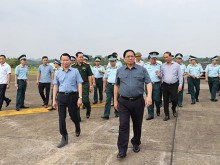
Officials from the Department of Energy Safety Management (DESM)under the Lao Ministry of Energy and Mines
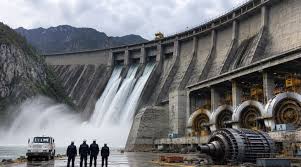
Russia has recently revealed the construction of a massive dam on the Yenisei River, utilizing approximately 24 million tons of concrete to create a structure that rises 242 meters high. This ambitious project, known as the Sayano-Shushenskaya Hydroelectric Power Station, is recognized as one of the largest hydroelectric facilities globally and a symbol of Soviet industrial ambition.
Situated in southern Siberia, the Sayano-Shushenskaya dam features a reservoir that extends over 300 kilometers and covers an area of about 621 square kilometers. The reservoir holds approximately 31.3 billion cubic meters of water, playing a crucial role in seasonal flow regulation, flood control, irrigation, and electricity generation.
The facility is equipped with ten turbines, each capable of generating 640 MW of power, contributing significantly to the energy supply of Siberia and supporting energy-intensive industries, particularly aluminum production. One of the major engineering challenges of the project was the installation of turbine rotors weighing around 920 tons, requiring precise alignment to avoid vibrations that could impair performance and equipment longevity.
On August 17, 2009, the second turbine unit was destroyed due to issues related to the turbine cover fixation system. Despite the severe damage to the plant, the dam structure remained stable, and the reservoir continued to be safely managed, preventing more serious consequences downstream. Following the disaster, Russia conducted a comprehensive review of safety standards in the hydroelectric sector, implementing upgrades to modernize control systems, enhance monitoring sensors, improve maintenance practices, and refine emergency response procedures.
The recovery and reconstruction efforts spanned several years, with damaged turbines replaced with new equipment and significant upgrades to safety and monitoring systems. By 2014, the last turbine was restored and reconnected to the national grid, marking the full operational capacity of the plant once again.
Today, over half a century after construction began, the Sayano-Shushenskaya remains a strategic energy asset for Russia. The project not only reflects the scale of Soviet-era mega-projects but also highlights the ongoing challenges in operating and maintaining critical infrastructure. The combination of immense technical scale, economic importance, and lessons learned from the 2009 disaster has made Sayano-Shushenskaya one of the most studied and monitored hydroelectric facilities in Russia and worldwide.