Asia likely to grow 5% faster than developed economies by year-end: Morgan Stanley
Asia's economic growth could outpace developed countries' by 5% by end-2023 driven by China's easing of
Morgan Stanley and UBS have recently upgraded their ratings for Chinese stocks, indicating a growing confidence in the market's potential for the second half of the year. This optimism comes as foreign investors collectively focus their attention on the artificial intelligence (AI) sector, which is seen as a key driver of growth.
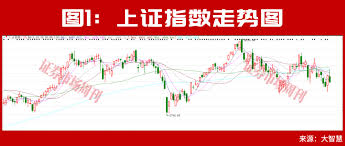
In early July, the performance of A-shares and Hong Kong stocks diverged significantly. The Shanghai Composite Index fluctuated around the 4000-point mark, while Hong Kong stocks experienced a sharp rebound due to low valuations. Despite these differences, both markets are anchored in the AI investment theme.
Several foreign financial institutions have recently issued bullish signals regarding Chinese stocks. Standard Chartered has given A-shares an overweight rating, while Morgan Stanley noted that overseas funds are still under-allocated and are expected to gradually increase their positions. Goldman Sachs has even suggested that investors shift funds from South Korean AI stocks to domestic Chinese counterparts. UBS anticipates a flow of funds into A-shares from various channels, including household deposits, margin financing, and foreign investments.
As of July 9, international investors' interest in Chinese stocks is reportedly on the rise, with a gradual reallocation of funds expected in the coming months. The current market environment is characterized by a cautious approach to building positions rather than aggressive buying. Analysts highlight that foreign investors remain in an “extreme underweight” state regarding Chinese assets, indicating ample room for future investments.
In its outlook for the second half of 2026, Standard Chartered mentioned that the Chinese market is approaching a momentum shift, with supportive policies expected to limit downside risks. The first half of the year saw stronger-than-expected growth driven by robust exports and industrial production. However, as the market enters the second half, the challenge will be to stimulate domestic demand.
Amidst this backdrop, foreign institutions are increasingly identifying the AI sector as a high-certainty investment theme. Morgan Stanley has pointed out that the commercialization of AI is accelerating, with companies like Tencent and Alibaba leading the charge. Goldman Sachs has recognized China's AI industry as one of the most compelling growth stories in technology today, driven by significant national support and rising global demand.
Recent surveys conducted by foreign investment firms have confirmed that their focus is primarily on the AI supply chain. Companies such as Tianfu Communication and Chaoying Electronics have garnered significant attention from foreign investors, who are keen to understand their production capabilities and market strategies.
In conclusion, as major financial institutions like Morgan Stanley and UBS express confidence in the Chinese stock market, particularly within the AI sector, foreign investments are expected to increase. This trend highlights the growing recognition of China's potential as a key player in the global AI landscape.