Vietnam Set to Join China and India as Emerging Market
In just one month, Vietnam will officially be upgraded to a Secondary Emerging Market by FTSE Russell,
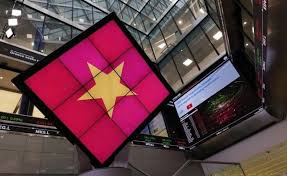
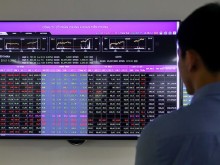
On August 21, FTSE Russell announced the results of its semi-annual review for September 2026, revealing that 27 Vietnamese stocks were added to the FTSE Global All Cap index. Among these, six large and mid-cap stocks, including Vietcombank (VCB), Vingroup (VIC), Vinhomes (VHM), BIDV (BID), Hoa Phat Group (HPG), and VPBank (VPB), were also included in the FTSE All-World index. However, the absence of well-known companies like Mobile World Investment Corporation (MWG), Refrigeration Electrical Engineering Corporation (REE), and Techcombank (TCB) has puzzled many investors.
These companies are significant players in their respective sectors and have attracted considerable interest from both domestic and foreign investors. The lack of inclusion in the FTSE index raises questions about how these firms, despite their strong fundamentals and popularity, failed to meet the requirements for inclusion.
FTSE Russell's criteria for index inclusion are stringent and involve multiple filters, including market capitalization, free float, liquidity, and accessibility for international investors. A critical factor is the "foreign headroom," which refers to the remaining capacity for foreign investors to purchase shares relative to the foreign ownership limit (FOL). For a stock to qualify for inclusion, the foreign headroom must be at least 20%. With many of these companies nearing their foreign ownership limits, they struggle to meet this requirement.
For instance, MWG is a leader in the retail sector and is currently undergoing a restructuring process to improve efficiency. However, its foreign ownership capacity is nearly exhausted. Similarly, REE operates across various sectors, including energy and real estate, but has also reached its foreign ownership limit. TCB, a major private bank, has a strong customer base but faces low foreign ownership limits.
The FTSE index does not rank companies based on quality alone; it also considers the practical aspects of investment. A stock can be large and liquid, but if the available shares for foreign investors are nearly depleted, it may still be excluded from the index. This situation illustrates the complexities of the FTSE's methodology and the challenges faced by Vietnamese companies in attracting foreign investment.
As Vietnam transitions to emerging market status on September 21, 2026, the process of integrating Vietnamese stocks into global indices will unfold over four phases, concluding in September 2027. This transition presents both opportunities and challenges for local companies aiming to enhance their visibility and accessibility to international investors.