iPhone 18 Pro Price Expected to Rise to $1,399
Apple CEO Tim Cook has indicated that the price of the upcoming iPhone 18 Pro could increase to $1,399 due
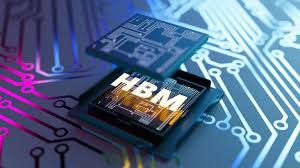
In a bold statement that has captured the attention of the tech industry, Professor Jin Jong-ho, known as the 'father of HBM' (High Bandwidth Memory), has declared that the true essence of artificial intelligence (AI) is memory, not graphics processing units (GPUs). This assertion comes amidst a backdrop of significant developments in the memory sector, particularly with the upcoming IPO of SK Hynix on the Nasdaq, which aims to raise approximately $28 billion, marking it as one of the largest overseas IPOs in U.S. history.
Despite recent fluctuations in memory stock prices, the sector has seen remarkable growth this year, with companies like SanDisk, Micron, and Samsung reporting substantial increases in their stock values. The surge in investment is largely attributed to the growing demands of AI technology, which is transitioning from model training to inference, thereby increasing the importance of memory.
Professor Jin's analysis reveals that GPUs deployed in data centers are only utilized for actual computation about 10% of the time. He explains that every time a system like ChatGPT generates a word, it must read data from HBM, perform calculations, and then write back to memory, consuming most of the operational time while the GPU remains idle. This inefficiency, he argues, highlights the need for a paradigm shift in how AI performance is viewed, emphasizing that the evolution of AI computation relies heavily on advancements in memory technology.
Looking ahead, Jin predicts that the demand for memory will double annually, potentially increasing a thousandfold within a decade due to the rise of scenario engineering, multimodal inputs, and AI agents. He points out that traditional memory operates on an eight-lane highway, while HBM has expanded to 2,048 lanes, with future developments possibly reaching millions of lanes.
Jin also outlines the future trajectory of memory technology, transitioning from HBF (High Bandwidth Flash Memory) to HBS (High Bandwidth SRAM), with the ultimate goal of creating a 'hundred-layer 3D building.' However, he notes that the greatest engineering challenges lie not in computation but in power supply and heat dissipation.
The structural dynamics of the industry are also changing. Historically, memory was a standardized commodity with buyers dictating prices. However, with the introduction of HBM4, memory manufacturers now require procurement commitments from major clients like NVIDIA, Google, and AMD early in the development process, indicating a shift in power dynamics towards suppliers.
In conclusion, Jin suggests that the integration of communication functions into HBM chips will enhance the position of memory manufacturers within the AI supply chain. The substantial IPO of SK Hynix not only reflects a shortage of memory but also signifies an elevation in the power structure of memory manufacturers in the AI era. Whether these predictions will materialize remains to be seen as the market and technology continue to evolve.