Fossil exhibition uncovers beginnings of life on Earth
As part of Huế Festival 2022, an exhibition titled 'Fossils - A Journey to Discover the Origin of Life on
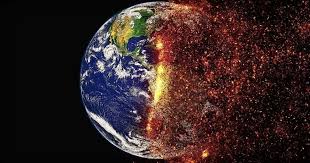
The Sun, the central star of our solar system, is gradually increasing in brightness and heat. Currently, the energy emitted by the Sun is about one-third greater than it was 4.5 billion years ago. According to stellar evolution models, this trend will continue until the Sun reaches the end of its life cycle in approximately 5 billion years. As the Sun brightens, Earth is expected to gradually lose its oceans due to evaporation effects.
For decades, scientists have debated the limits of life on Earth as the Sun becomes increasingly luminous. Initial estimates by James Lovelock and colleagues in 1982 suggested that Earth's photosynthetic biosphere would cease to exist in about 100 million years. However, a new study published on May 28 in the journal JGR Atmospheres presents a more optimistic outlook. Researchers now believe that plant life could continue to exist for around 1.8 billion more years, nearing the time when Earth may lose its oceans due to radiation breaking down water molecules or uncontrolled evaporation, expected to occur in about 2 billion years.
Jacob Haqq-Misra, an astrobiologist at the nonprofit Blue Marble Space and co-author of the study, stated, "We aim to demonstrate that life on Earth, particularly complex vegetation, may persist longer into the future than previously indicated by earlier studies."
Photosynthesis and CO2 play a crucial role in sustaining life on Earth. This biological process allows plants, algae, and some bacteria to use sunlight to convert CO2 and water into energy-rich organic compounds while releasing oxygen. However, as the Sun heats Earth to a certain threshold, plants will lose their ability to photosynthesize, leading to the collapse of the entire food chain and the extinction of life.
Robert Graham, a planetary scientist at the University of Chicago, explained, "Earth has maintained a relatively hospitable surface temperature for most of the last 4 billion years due to a natural climate regulation mechanism." This mechanism involves storing CO2 in rocks and releasing it through volcanic activity. As Earth warms, the planet absorbs more CO2 from the atmosphere and stores it underground, helping to stabilize temperatures but simultaneously reducing the available CO2 for plants.
In their recent study, Haqq-Misra and co-author Eric Wolf employed 29 climate models to estimate what might happen to Earth's plant biosphere under various scenarios. They examined two extreme limits: one where Earth becomes too hot for life to exist even if CO2 remains stable, and another where CO2 drops too low despite stable temperatures. From there, the research team analyzed intermediate conditions regarding CO2 and solar radiation, including scenarios where Earth could effectively absorb carbon from the atmosphere as temperatures rise.
The research team also included various plant groups in their models, including species that can thrive in very low CO2 conditions due to unique photosynthetic mechanisms, such as CAM (crassulacean acid metabolism) found in succulents and orchids, as well as some marine plants that can dissolve and utilize carbon from ocean systems.
Robert Graham noted, "This is a step forward from previous works and shows that complex biospheres like Earth can withstand environmental changes due to the Sun's increasing brightness better than previously predicted." Andrew Rushby, an astrobiologist at Birkbeck, University of London, remarked that this study updates the concept of the "lifespan of the biosphere." However, he emphasized that these are still general estimates. "We cannot predict or know the evolutionary possibilities that the photosynthetic biosphere may achieve to adapt to increasing solar energy and decreasing CO2 levels in the atmosphere, especially over billions of years," Rushby shared.
The study's authors also cautioned that "limits due to thermal stress or nutrient deficiencies may only reflect what we observe in the current biosphere, not hard boundaries for the evolutionary potential of life." Furthermore, no one can be certain how life will adapt under entirely new conditions. Haqq-Misra expressed optimism regarding the research findings: "The Earth system is highly resilient, and we are part of a process that could last much longer than previously thought."