Ecuador vs Curacao: World Cup 2026 Match Preview
Ecuador is set to face Curacao in the World Cup 2026 qualifiers, promising an exciting clash. Fans
The World Cup 2026 has already showcased 48 matches, matching the total number of group stage games from the 2018 and 2022 tournaments. This data provides insight into a contentious issue following FIFA's decision to expand the tournament: will there be more lopsided games? Early statistics suggest that the answer is yes.
Concerns about the widening skill gap among footballing nations have been highlighted, particularly with the inclusion of debutants like Curacao, Cape Verde, Jordan, and Uzbekistan. A notable example is Germany's 7-1 victory over Curacao in their opening match of Group E.
However, focusing solely on a few high-scoring games does not present the complete picture. After the first 48 matches, only 54% ended with a maximum one-goal difference or a draw, a significant decrease from 69% in 2018 and 62% in 2022. Conversely, victories by three goals or more accounted for 27% of total matches, compared to just 17% in Russia and 10% in Qatar.
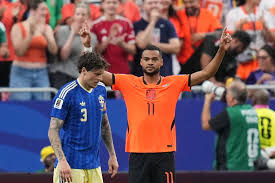
Viewers tuning into World Cup 2026 are likely to witness more one-sided encounters than in recent tournaments, with scores such as Canada defeating Qatar 6-0, Sweden beating Tunisia 5-1, and the Netherlands overcoming Sweden 5-1. Yet, it's important to note that scorelines do not always reflect the match dynamics. For instance, Spain's goalless draw with Cape Verde and England's stalemate with Ghana illustrate that a team can dominate a game without winning.
Analysts have introduced the "field tilt" metric, which measures the percentage of passes made in the opponent's final third, to assess match control. According to Opta, 27% of matches in World Cup 2026 saw one team making at least 80% of their passes in the attacking zone, compared to only 14% in 2018 and 2022. Lowering the threshold to 70% still reveals a clear disparity, with 46% of matches exhibiting such dominance, up from 31% and 39% in the previous tournaments.
Some matches have demonstrated extreme control, such as Canada achieving 97.4% of attacking activity against Qatar, while Spain managed 97.3% against Cape Verde. Interestingly, the outcomes of these matches varied; Canada won decisively, while Spain drew.
While the trend indicates stronger teams are exerting more control, it would be unjust to attribute this solely to the newcomers. For example, Haiti narrowly lost to Scotland 0-1, Brazil 0-3, and Morocco 2-4, while maintaining more possession than Scotland. Similarly, Iraq, despite losing to France 0-3, displayed effective defensive organization at times.
Conversely, some experienced World Cup teams have opted for a cautious approach, as seen with Ghana, who played defensively against England and ended in a 0-0 draw. This suggests that the disparities are not only due to the inclusion of new teams but also reflect the strategies employed by teams in the tournament.
As the group stage concludes and the knockout rounds commence, the number of balanced matches may increase as weaker teams are eliminated. Nevertheless, World Cup 2026 is currently demonstrating a higher likelihood of witnessing lopsided games compared to recent editions.