USD Price Increases in Vietnam Amid Global Trends
The USD has seen a notable increase in Vietnam, with banks raising their buying and selling rates. This
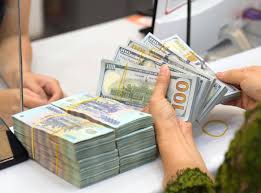
The US dollar (USD) has experienced a notable increase in value today, June 19, 2026, against various currencies, while many other foreign currencies have sharply declined. The State Bank of Vietnam has raised the central exchange rate by 8 VND, bringing it to 25,181 VND/USD. Meanwhile, commercial banks have reported an increase of 9 VND in their exchange rates, with Vietcombank purchasing USD at rates between 26,090 and 26,120 VND and selling it at 26,440 VND. Other banks, such as ACB and Vietinbank, have also adjusted their rates similarly.
In contrast, other foreign currencies have seen a downward trend. At Vietcombank, the Euro has decreased by 134 VND, with purchasing rates at 29,404 - 29,701 VND and selling rates at 30,954 VND. The British Pound has also dropped by 250 VND, with buying rates at 33,889 - 34,231 VND and selling rates at 35,327 VND. Additionally, the Australian dollar has seen a reduction of 30 VND, with buying rates at 17,990 - 18,171 VND and selling rates at 18,753 VND.
Recent reports from the State Bank of Vietnam indicate that the total transaction volume in USD converted to VND for the week of June 8-12 was approximately 806.64 trillion VND, averaging 161.33 trillion VND per day. This marks a decrease of 5.655 trillion VND per day compared to the previous week. The most significant transaction volumes were observed in overnight and one-week terms, accounting for 93% and 2%, respectively.
The USD interest rates have shown minimal fluctuations in key terms compared to last week. Specifically, the overnight rate remains unchanged at 3.63% per annum, while the one-week rate has increased slightly by 0.01% to 3.68% per annum. These rates are lower than the Vietnamese dong by 2-2.5% per annum across various terms.
On the global market, the USD has surged significantly, with the USD-Index rising by 0.72 points to reach 100.81 points. This increase marks the highest level for the dollar in a year, following signals from the Federal Reserve that have heightened investor expectations for potential interest rate hikes this year. This development has led to the Japanese yen falling to its lowest level in two years, prompting warnings from Japanese officials.
The Federal Reserve's decision to maintain interest rates within the range of 3.5% to 3.75% during its first meeting under Chairman Kevin Warsh, along with a comprehensive review of monetary policy, has influenced market conditions significantly. Updated forecasts indicate that nearly half of the policymakers expect at least one interest rate increase this year due to rising inflation concerns, despite the Chairman not yet providing personal insights on policy direction.
Data from the London Stock Exchange (LSE) shows that the futures market currently predicts a 68% likelihood that the Fed will raise interest rates in September. Stronger economic growth prospects in the US are further bolstering expectations for tighter monetary policy. Recent employment reports have consistently shown job creation surpassing economists' forecasts, and initial unemployment claims in the US have decreased over the past week, reflecting a low level of layoffs.