Significant Decline in Land Prices Across Various Regions
Land prices in several areas of Vietnam have seen a substantial decrease, with some regions reporting drops
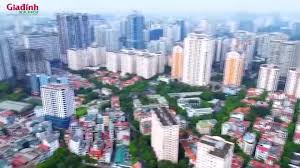
In October 2026, the apartment market in Ha Dong, Hanoi, continues to show robust activity, with prices remaining high despite the introduction of new regulations regarding the lifespan of apartments. The average selling price for apartments in this area fluctuates between 40 and 100 million VND per square meter.
Real estate agent Tra Mi reported that a three-bedroom apartment measuring 93 square meters at the Kepler Land project is currently listed for 7 billion VND, which equates to approximately 75.27 million VND per square meter. Similarly, another three-bedroom unit of 100 square meters at the Roman Plaza project is on the market for 7.3 billion VND, or about 73 million VND per square meter. Additionally, a three-bedroom apartment of 110 square meters in the Mo Lao urban area is priced at 5.5 billion VND, translating to around 50 million VND per square meter.
While prices have cooled compared to the peak periods of 2024-2025, they remain relatively high when considering the average income levels of residents. Notably, there are almost no apartments available for under 3 billion VND. Several real estate agents have noted that the price adjustments are attributed to several factors, including a significant increase in housing supply, particularly in the social housing sector, alongside a general market cooling and new policies aimed at stabilizing prices.
Despite these changes, Ha Dong continues to be a vibrant real estate market, recognized as a prime area in the capital with a dense population and a high rate of urbanization. The new regulations concerning the lifespan of apartments, outlined in Resolution No. 21-NQ/TW dated July 28, 2026, by the Central Committee of the Communist Party of Vietnam, have sparked various opinions. This resolution emphasizes that the lifespan of an apartment is determined by its design lifespan, typically ranging from 50 to 100 years. However, reaching the end of this lifespan does not automatically revoke ownership rights.
Under the new regulations, if an apartment building is deemed safe after inspection, residents can continue living there without additional fees. Conversely, if the building is found to be unsafe or severely damaged, authorities may require its demolition and reconstruction. In such cases, apartment owners will either contribute to the construction costs or receive compensation as stipulated by law.
Despite the stricter regulations, the apartment prices in areas like Yen Hoa, Hanoi, remain high, indicating a complex relationship between regulatory changes and market dynamics. Experts believe that these new regulations will enhance the legal framework governing the entire lifecycle of apartment buildings, promoting a more civilized approach to property ownership and helping buyers recognize the true value of their living spaces rather than succumbing to market trends.