Experts Predict Surprising Trends for Gold Prices Next Week
Experts from Wall Street are expressing a negative outlook for gold prices in the coming week, following
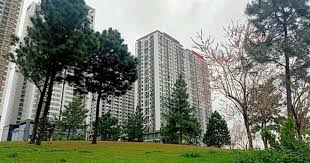
Experts predict that the trend of declining prices for apartments and land lots may become more pronounced starting in the third quarter of 2026. This is largely due to the financial pressures faced by investors who are struggling to repay bank loans.
According to Đinh Minh Tuấn, director of Batdongsan.com.vn for the Southern region, the market may begin to see "bargain" listings if interest rates do not decrease. However, this trend will primarily affect investors who have heavily leveraged their finances.
The current market for land lots is experiencing slow liquidity, while the apartment sector has also seen a slowdown in transaction speed, although some deals are still occurring. In contrast, the market for individual houses has shifted, with real housing demand becoming more dominant, while investors face greater challenges.
Phạm Thị Miền, deputy director of the Vietnam Real Estate Research and Assessment Institute, noted that the phenomenon of discounted sales for apartments has been evident since early 2026, mainly among investors who entered the market during a price surge while using significant financial leverage, particularly those with loans that have a grace period on principal repayments.
As these investors enter the repayment phase amidst rising interest rates, many are compelled to sell their properties to restructure their cash flow. Additionally, some investors, influenced by the fear of missing out (FOMO), bought at inflated prices during the market's peak but failed to achieve expected profits, leading to forced sales.
With an increasing supply of properties for sale, buyers are becoming more cautious and observant, which has slowed liquidity in the secondary market.
Miền forecasts that as many loans reach the stage of requiring both principal and interest repayments, financial pressures will likely escalate. This could lead to an increase in discounted sales, particularly among heavily leveraged investors.
Võ Hồng Thắng, deputy general director of DKRA Consulting, highlighted that in the first half of 2026, alongside general economic fluctuations and global geopolitical instability, the domestic real estate market is facing significant challenges in accessing capital.
Bank loans and interest rates for property purchases have remained high since late 2025, which Thắng identifies as key factors directly impacting the noticeable stagnation across most market segments and regions.
If these adverse conditions persist throughout the last six months of 2026 without improvement, the market is expected to continue experiencing certain corrective reactions. While price reductions are an inevitable trend, they are unlikely to occur broadly and will instead be concentrated in specific segments.
Land lots in peripheral provinces with limited transportation connections and low real housing demand are likely to be the most affected if market liquidity remains low. Conversely, mid-range apartment projects that meet real housing needs in major urban areas, along with properties capable of generating cash flow, are expected to support the market amid forthcoming fluctuations.
Thắng believes that a portion of investors and buyers who utilized significant financial leverage during the "cheap capital" period of 2024-2025 will increasingly face the pressure of bank loan maturity. This may force them to lower their profit expectations and even accept discounts compared to their initial purchase prices to quickly liquidate properties and recover cash flow.