What is Binance Coin (BNB)? The world of crypto on Binance exchange
Binance Coin (BNB) is a cryptocurrency that can be used to trade and pay fees on the Binance cryptocurrency
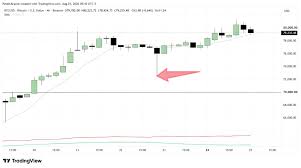
Renowned technical analyst and Factor LLC CEO Peter Brandt has publicly challenged the reliability of Binance's trading infrastructure after a notable anomaly in Bitcoin's price occurred on August 22. During this incident, a localized price dislocation on Binance triggered a cascade of forced liquidations, adversely affecting retail clients' protective orders, while trading on competing platforms proceeded as normal.
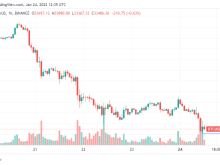
The market drawdown on Binance escalated into a localized flash crash, with Bitcoin's price plummeting to $72,500 within seconds. In contrast, the broader market remained around $79,000. A comparison with charts from the U.S.-based Coinbase exchange highlighted the anomalous nature of this price movement, as Bitcoin's lowest price on Coinbase during the same hour was $75,800, resulting in a $3,300 interexchange spread.
This significant price discrepancy led to the complete liquidation of margin collateral for open positions on Binance, triggering stop-loss orders exclusively for its clients. Brandt criticized the incident on social media, labeling it another Binance "boondoggle" that caused ordinary retail traders to be "stopped out" far below the actual market lows. He emphasized that the exchange has a troubling history of severe stop-outs, recalling a similar incident that occurred on October 10, 2025.
The mechanics behind this price movement reveal the fragmented nature of the cryptocurrency market, where liquidity is dispersed among various independent companies. For instance, when a large market sell order hits Binance, an immediate vacuum in the exchange's local order book occurs due to insufficient buyers at that moment. This triggers an automatic domino effect, where the initial price decline forces the exchange's algorithms to liquidate leveraged positions, further releasing new sell orders into the market and dragging the price down toward $72,500.
This incident underscores the critical risks associated with tying protective orders to the local "Last Price" during periods of low liquidity. To mitigate such risks, the use of a weighted, market-wide Mark Price remains the only reliable protection against isolated market wicks.