Biden visits all three attack sites on 20th anniversary of 9/11
President Joe Biden commemorated the 20th anniversary of the Sept. 11 attacks on the United States on
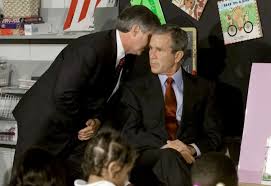
On the 25th anniversary of the September 11 attacks, memories of that fateful day continue to haunt those who were present. A Reuters journalist who accompanied President George W. Bush on that day recounts the events that unfolded starting from the early morning in Florida, where he was set to cover a routine educational event. Little did anyone know that the day would turn into a national tragedy.
It was the morning of September 11, 2001, when I first saw President Bush jogging at a golf course in Florida. As one of the two Reuters reporters traveling with him, my task was to report on what was supposed to be a standard meeting with students to promote his education policies. At that time, Bush had only been president for less than eight months.
Just hours later, he would face the most severe crisis of his presidency as America was attacked in a manner not seen since Pearl Harbor in 1941. The tragedy struck while he was at Emma E. Booker Elementary School in Sarasota, Florida. While the president interacted with teachers and students, I was in a nearby press center, watching live coverage of the unfolding events. We initially believed that the first plane hitting the World Trade Center was an accident, but our disbelief turned to horror as we witnessed a second plane crash into the other tower.
Bush was reading to children when a White House aide whispered in his ear, informing him that America was under attack. The shock on his face was palpable. By the end of that week, he had experienced a whirlwind of emotions, from horror and anger over the attacks to sorrow for the victims and a resolute determination that those responsible would face justice.
Now 80 years old, Bush is expected to attend a memorial event on September 11 to mark the 25th anniversary of the attacks at Ground Zero in New York. On the evening of September 9, he shared his reflections at his presidential library in Dallas, where 16 pieces of art inspired by the courage and sacrifice of that day are on display. "The truth gradually became clear... that the world had changed," he remarked in a CBS interview.
In the aftermath of the attacks, Bush focused on preventing future incidents. The hijackings exposed severe security flaws, prompting the U.S. to enhance airport and public building security measures. His administration faced criticism for the harsh interrogation methods used on some Muslim suspects, and the Iraq War in 2003 was widely viewed as a costly mistake.
As the crisis unfolded, a frantic effort began to protect the president. After the planes were hijacked, Bush was quickly whisked away to Air Force One to leave Florida. The scale of the crisis became apparent as the Twin Towers collapsed, resulting in approximately 3,000 deaths. The third plane struck the Pentagon, killing 64 people on board and 125 within the building, while a fourth plane crashed in a field in Pennsylvania after passengers fought back against the hijackers, killing all 44 onboard.
Washington was engulfed in panic. Smoke billowed from the Pentagon, raising fears of further attacks. The White House was evacuated, and even female Secret Service agents were asked to remove their high heels for quicker escape.
Bush spent the day aboard Air Force One, flying across the country. His first stop was Barksdale Air Force Base in Louisiana, followed by Offutt Air Force Base in Nebraska. He later advocated for upgrades to Air Force One’s communication systems after struggling to maintain contact with the White House during the flight.
In Nebraska, he entered a secure bunker to hold a conference call with senior national security advisors and Vice President Dick Cheney. Eager to return to Washington, he finally arrived back at the White House late that afternoon.
That evening, he addressed the nation from the Oval Office, stating, "The images of planes crashing into buildings, fires raging, and massive structures collapsing have left us in a state of disbelief, engulfed in profound sorrow and a quiet but unyielding anger." Meanwhile, I, along with most of the White House press corps, was stranded in Florida, unable to fly anywhere due to the shutdown of all air travel.
As the then-president of the White House Correspondents Association, I worked to facilitate our return to the capital, and we eventually took a charter bus back to Washington. After a 14-hour journey, the first sight of Washington was the gaping wound of the Pentagon, still smoldering.
On September 14, I accompanied Bush to Ground Zero. The Twin Towers were still smoldering, and the acrid smell of smoke was detectable from miles away. As Bush toured the devastated area with then-New York Mayor Rudy Giuliani, concerns arose that surrounding buildings might collapse.
A thick layer of ash covered everything, from the sidewalks to the streets and the shoulders of exhausted firefighters. Standing atop the remnants of a fire truck, Bush addressed the rescue workers, declaring that America was now at war with radical Islamic elements. "I hear you! I hear you! The world hears you! And the people who knocked these buildings down will hear all of us soon!" he shouted through a megaphone.
The shoes I wore that day were covered in ash and soot. When I returned home, I placed them in a plastic bag and stored them in a closet. Twenty-five years later, they remain there, no longer wearable but a lasting reminder of that tragic day.



