Foreign Investors Sell Nearly 2 Trillion VND Amid VN-Index Drop
Foreign investors sold a net amount of nearly 2 trillion VND as the VN-Index plummeted by 62 points, closing
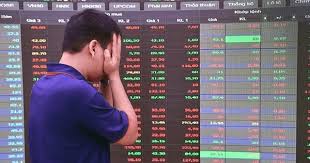
The year 2026 has proven to be a challenging one for the stock market, with many individual investors experiencing losses. However, the pressure on investment funds is even more significant, as a small percentage drop in portfolios worth billions translates to substantial financial losses.
Nguyen The Minh, Director of An Binh Securities Investment Bank, noted that while individual investors may face losses of 10-20%, funds managing over $1 billion can incur losses of 5% or more, which amounts to a considerable sum. He emphasized the importance of adaptability in the current market environment, suggesting that investors should focus on adjusting their strategies rather than trying to predict market movements accurately.
Minh highlighted that the market has been oscillating without forming a sustainable upward trend since 2025. He advised investors to adopt a swing trading strategy, which involves buying when the market dips and selling when prices rise. This approach is particularly relevant if interest rates remain high, as it allows investors to navigate a sideways market effectively.
Furthermore, Minh cautioned against relying solely on dollar-cost averaging (DCA) in the current environment. While DCA can help reduce the average cost of investments, it does not necessarily prevent absolute losses if stock prices continue to decline. Instead, he recommends focusing on momentum stocks—those that show strong price and volume growth—while also considering the fundamental strengths of the companies behind them.
In summary, in a market characterized by uncertainty and frequent changes, investors are encouraged to prioritize adaptability and select stocks with solid fundamentals and strong cash flow. Minh's consistent viewpoint is that when interest rates are high, swing trading should be prioritized, while increasing investment in strong stocks is advisable when rates begin to decrease.