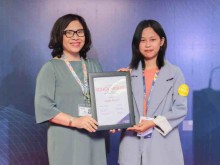
Hanoi University of Education Releases Grading Scale for Competency Tests
Hanoi University of Education has announced a new grading scale that converts scores from the competency

In Vietnam, the debate surrounding the high school graduation exam and university admissions continues to evolve. PGS.TS. Võ Văn Minh, the rector of the University of Danang's University of Education, emphasizes that the current question is not merely whether to separate the two exams, but how to ensure a quality national assessment while promoting the autonomy of higher education institutions and alleviating pressure on students and society.
Võ Văn Minh argues that in an educational system with millions of students studying under vastly different conditions across regions, the state must provide a reliable and objective assessment standard. This is essential to gauge what students have achieved after 12 years of basic education. Without such a standard, it becomes challenging to obtain a trustworthy overview of the quality of education nationwide.
According to Minh, the high school graduation exam and university admissions serve different purposes. The former is a state responsibility to verify that students meet the educational standards, while the latter is the prerogative of universities to select candidates suited to their specific training needs. However, he insists that different objectives do not necessitate organizing two independent exams.
"What we need to establish is a highly reliable national standardized exam that accurately reflects student capabilities and creates a common assessment platform. Based on this, universities should have the discretion to determine how much they use the exam results or combine them with other assessment methods for specialized programs," he stated.
Minh proposes a three-tiered framework for future national standardized exams. The first tier involves establishing a unified national standard, including a standardized question bank, scientific testing processes, and a reliable data system. The second tier focuses on flexibility for students, allowing for more adaptable exam scheduling, formats, and methods that align with real-world conditions and technological advancements. Long-term, this could include computer-based testing and multiple exam sessions, while being cautious about the digital infrastructure disparities across regions.
The third tier emphasizes the autonomy of higher education institutions, allowing them to choose data sources and admission methods that align with their missions and training requirements. Some programs may utilize standardized exam results, while others may require additional assessments or interviews.
Minh warns that if each institution employs different methods without a mechanism for equivalence, the burden ultimately falls on students and their families. Therefore, the state must build a robust national testing infrastructure that allows for institutional autonomy while operating within a transparent, equitable ecosystem.
To achieve a true standardized exam, significant investment in assessment science is necessary, including creating a reliable question bank, standardizing the exam development process, and applying advanced data analysis and technology throughout the testing cycle. The results of the exam should not only reflect individual scores but also serve as valuable data for educational quality research, policy-making, curriculum improvement, and teacher training enhancement.
In the future, a national education data ecosystem should be established, connecting data from basic education with higher education and the labor market, enabling deeper research into the relationships between input quality, training processes, and output results. This would represent the long-term value of a national standardized exam in the digital age.
As universities gain more autonomy in admissions, a national standardized exam becomes increasingly significant. It provides a common reference point for higher education institutions, reducing the need for students to participate in multiple exams. Therefore, maintaining the high school graduation exam alongside university admission autonomy is not mutually exclusive. Instead, a well-structured standardized exam lays the groundwork for transparent, scientific, and responsible admission practices across universities," concluded PGS.TS. Võ Văn Minh.