Ukraine Prepares for New Mobilization Amid Ongoing Russian Offensive
As Ukraine gears up for a new wave of mobilization in August, Russia continues its steady offensive in the
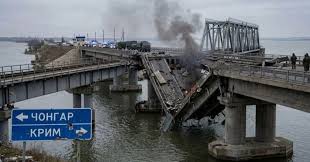
Recent military engagements between Russia and Ukraine have highlighted a strategic focus on targeting bridges, which are critical to both sides' supply lines. Experts suggest that the ongoing attacks on these infrastructures signal that the conflict is far from resolution. The destruction of bridges, particularly in regions controlled by the opposing side, is a tactic aimed at disrupting logistics and making it more challenging to maintain combat forces.
For four years, both Russia and Ukraine have systematically destroyed bridges along the front lines to hinder offensive operations. In recent months, however, the scope of these attacks has expanded, with both nations targeting bridges deep within enemy territory. This strategy is intended to disrupt supply operations, complicating the logistics of sustaining military forces in the field.
Bridges have always been a priority target in warfare due to their irreplaceable role in military transport networks. Unlike supply depots, bridges cannot be easily relocated or camouflaged, making them vulnerable to detection and attack. Destroying a single bridge can halt the movement of hundreds of vehicles carrying fuel, ammunition, and reinforcements, effectively crippling a supply route with one strike.
Both sides have suffered significant losses in engineering units and bridging equipment throughout the conflict, particularly in efforts to cross major rivers like the Siverskyi Donets and Oskil. Consequently, replacing a destroyed bridge is often difficult and time-consuming, forcing frontline soldiers to create makeshift crossings with locally available materials.
The impact of these attacks extends beyond the immediate destruction of bridges. Supply networks, which rely on limited crossing points, become strained when a bridge is taken out. Convoys are forced to reroute, significantly increasing travel distances and times, which in turn reduces the amount of supplies that can reach the front lines daily while also increasing fuel consumption and vehicle wear.
Despite Russia's longstanding strategy of targeting Ukrainian infrastructure through airstrikes, bridges were not always a frequent target. However, they have gained importance in recent military operations, with the Russian Ministry of Defense frequently reporting on attacks against Ukrainian bridges. A recent interview with a deputy commander from the 10th Tank Regiment indicated a focused effort on destroying enemy bridges to cut off supply lines.
Conversely, Ukraine has also ramped up its attacks on bridges in Russian-controlled territories. Recent strikes have targeted several key bridges connecting Crimea to regions like Kherson and Zaporizhia, which are crucial for Russian forces in southern Ukraine. Although many of these bridges have only been damaged rather than completely destroyed, such attacks still impede movement and force Russian supply convoys to take alternative routes.
In a broader context, Ukraine has expanded its operations further into Crimea, a vital logistical hub for Russian military activities in southern Ukraine. Additionally, Ukraine has targeted significant bridges within Russian territory, disrupting vital rail links used for transporting military supplies. The recent uptick in bridge attacks indicates that both sides no longer expect a swift change in the current operational landscape.
In the early stages of the conflict, both Russia and Ukraine aimed to preserve bridges they anticipated would be necessary for future offensives. However, this approach appears to have shifted. The destruction of bridges deep within enemy territory suggests that both sides now prioritize disrupting each other's logistics over maintaining infrastructure for potential future breakthroughs. Instead of preparing for large-scale maneuver operations, both appear focused on holding their current positions, making incremental gains, and inflicting attrition on their opponent.