World Cup 2026 Final Set for July 19: Argentina vs. Spain
The final match of the 2026 World Cup will see Argentina face Spain on July 19 at MetLife Stadium. This
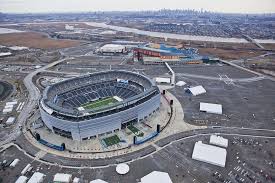
MetLife Stadium, located in New Jersey, will host the final match of the 2026 World Cup, featuring Spain against Argentina. This stadium, built primarily for American football, is notable for its neutral design, which allows it to accommodate a wide range of events. On July 19, over 82,000 spectators are expected to fill the stadium for this historic match.
Unlike many modern stadiums, MetLife does not boast a striking architectural form. It lacks the massive roof of SoFi Stadium in Los Angeles or the illuminated façade of Allianz Arena in Germany. Instead, it presents a simple oval shape, surrounded by a steel frame and silver aluminum panels. Upon its opening in 2010, the design received mixed reviews, with some critics likening it to a giant air conditioner.
However, over the past decade, this seemingly 'safe' design has proven effective. MetLife Stadium is now recognized as one of the busiest venues in the world, hosting around 222 events annually. The key to its success lies not in its architectural form but in its adaptability. The design philosophy aimed to create a neutral space that could serve both the New York Giants and the New York Jets, two teams with distinct identities.
The stadium was built on the site of the old Giants Stadium, with an investment of approximately $1.6 billion. It spans nearly 195,000 square meters and has a seating capacity of about 82,500. From the outset, the design faced a unique challenge: to create a venue that did not favor either team. This neutrality influenced every design decision, from the exterior appearance to the interior spaces.
Rather than using a strong, identifiable exterior, architects opted for a steel frame with horizontal aluminum panels. This approach creates a uniform look, minimizing fixed identity elements while allowing for flexibility based on the event. Team identities are primarily expressed through lighting; the stadium's façade changes to blue for Giants games and green for Jets games, with corresponding updates to signage and graphics.
This design strategy has helped MetLife avoid becoming outdated as ownership, sponsorship, or usage needs change. After 15 years, the aluminum façade remains largely unchanged, while the lighting and signage are continuously updated. The stadium's architecture allows for a seamless transition from a sports venue to a large-scale performance space.
MetLife's neutral design philosophy has set the stage for its selection by FIFA to host the 2026 World Cup final. The venue's ability to accommodate various events, from football to international soccer matches and major concerts, has proven its versatility. The stadium is optimized for multi-event use, with flexible service areas and modular advertising systems that can be easily updated without altering the structure.
Despite being chosen for the World Cup final, MetLife Stadium will undergo significant renovations to meet FIFA's standards. Originally designed for American football, it will require modifications to its artificial turf and field dimensions to comply with soccer regulations. Approximately 1,740 seats will be removed to create space for technical areas and safety buffers around the field, and the artificial turf will be replaced with natural grass.
During the tournament, the stadium will temporarily be referred to as New York New Jersey Stadium, with all commercial branding covered or removed in compliance with FIFA regulations. These changes will be implemented without major structural alterations, allowing the stadium to revert to its original configuration for NFL seasons post-World Cup.