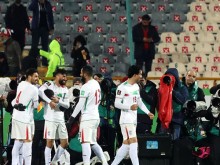
World Cup 2026 Match Schedule for July 2
The World Cup 2026 continues on July 2 with two exciting matches: Belgium vs. Senegal and the USA vs. Bosnia
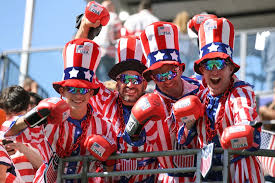
The World Cup 2026 may not have brought success for the U.S. national team, but it played a crucial role in improving the host nation's image and winning over global fans. As one of the three host countries, American players entered the tournament with high hopes. They faced a relatively favorable bracket, presenting a rare chance to captivate a new generation of supporters. However, their dream of reaching the quarter-finals for the first time in 24 years was dashed after a 1-4 defeat to Belgium in the Round of 16. While the tournament was disappointing in terms of performance, it offered a positive impression of the U.S. to the world.
Over nearly 40 days, the event attracted millions of fans from across the globe, allowing them to experience a different America than what they had seen on social media or through political controversies. According to Jonathan Clegg and Joshua Robinson, commentators for the Wall Street Journal, this showcases the soft power that Washington still possesses.
Before the tournament began, there were concerns that World Cup 2026 could become a headache for the U.S. High ticket prices, public transportation systems potentially unable to handle the influx of tourists, and the immigration policies under President Trump made international fans hesitant. These worries intensified as the opening day approached, with thousands of tickets for the U.S. team's first match still unsold and a Somali referee denied entry due to security checks.
FIFA President Gianni Infantino acknowledged the unique challenges of hosting the World Cup in the world's largest superpower. However, once the matches commenced, most controversies faded into the background. Millions of fans flocked to the U.S., discovering a country vastly different from their initial perceptions. Unlike the Olympics or other short-term sporting events, the World Cup required fans to stay in the host nation for weeks, traveling between cities to watch games. During this time, they experienced local life, culture, and the American people.
Visitors were impressed not by modern stadiums or grand displays but by the everyday life of Americans. Many international fans reported feeling that the U.S. was more open and friendly than portrayed on social media or in the news. They enjoyed trying fried hash browns at Waffle House, exploring smoked brisket sandwiches at Buc-ee's, marveling at Waymo self-driving cars, and being awed by the scale of highways, shopping malls, and frozen food aisles in Costco.
Images of Dutch fans turning streets into a 'sea of orange' and Scottish supporters filling bars in Boston contributed to a festive atmosphere on social media, promoting the U.S. more effectively than any marketing campaign. A survey conducted by the U.S. Travel Association just before the tournament revealed that 91% of tourists were satisfied with their trip, and nearly two-thirds returned with a more positive view of America. 'International visitors are the best brand ambassadors for the U.S.,' the association stated.
Celebration traditions were welcomed rather than restricted, and U.S. officials did not separate rival fan groups, even during the semi-final between England and Argentina, which was deemed risky. Mark Roberts, head of the UK Football Policing Unit, expressed relief at seeing fans monitored and treated based on actual behavior rather than outdated stereotypes.
As the tournament progressed, concerns over costs, geopolitical issues, and hot weather diminished. FIFA even raised its revenue forecasts from broadcasting rights, ticket sales, and merchandise from $11 billion to $15 billion, reflecting confidence in the tournament's commercial success. Political factors remained present throughout the event but did not overshadow the football atmosphere. President Trump drew attention by calling Infantino to reconsider the suspension of striker Folarin Balogun after a red card in the Round of 16, prompting a strong reaction from Belgium before their match against the U.S. However, Belgium's convincing victory quickly quelled any controversy.
The World Cup 2026 is set to conclude with the championship match between Argentina and Spain at 3 PM ET on July 19 (2 AM on July 20 Hanoi time) at MetLife Stadium in New Jersey. The White House confirmed that President Trump would attend this 104th match, while Infantino stated that the U.S. leader would present the trophy to the winning team. Mexican President Claudia Sheinbaum also announced her attendance at MetLife, having received an invitation from President Trump. Together with Canada, the U.S. co-hosted the World Cup 2026. Thus, even though the U.S. team did not advance as hoped, the tournament helped the host nation achieve what many image promotion campaigns could not.
'Everything about this World Cup has been amazing,' said Norwegian striker Erling Haaland after the tournament, drawing attention for bringing home a stuffed cat he bought in Dallas, Texas. 'I like Americans. They are quite humorous, and I enjoy their way of life,' Haaland remarked.