Pakistan Launches Search Operation for Missing Cargo Plane
A cargo plane carrying five crew members has gone missing over the Arabian Sea near Ormara, Pakistan.
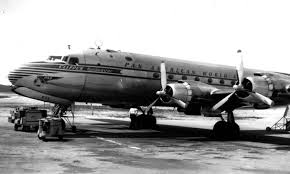
The wreckage of the Pan Am flight known as "Clipper Endeavor," which disappeared 74 years ago, has been located off the northern coast of Puerto Rico. The tragic incident, which resulted in the deaths of 52 people, prompted major reforms in aviation safety practices.
According to a report by CNN, the Air/Sea Heritage Foundation, in collaboration with the "Expedition Unknown" program from Discovery Channel, discovered the wreck using an underwater drone. The Douglas DC-4 aircraft went missing shortly after taking off from Puerto Rico on April 11, 1952, with 64 passengers and 5 crew members on board. Although all passengers survived the initial impact, only 17 were rescued while the others were lost with the aircraft as it sank rapidly.
Investigators noted that part of the cause of the tragedy was the lack of safety instructions. Russ Matthews, president of the Air/Sea Heritage Foundation, became interested in the case in 2019 after reading about a luggage tag from the flight that washed ashore in Florida. This led him to search through Pan Am archives and Coast Guard records for clues about the crash site.
Tony Romeo, CEO of Deep Sea Vision, joined the search effort when one of his ships, equipped with advanced sonar technology, passed through the search area. The team combined their research with weather data from the time of the accident to create a search map covering over 34 square kilometers. The underwater drone successfully located the wreck on its first scan on June 2, revealing a broken fuselage at a depth of approximately 610 meters.
Images captured during the survey confirmed the identity of the aircraft, displaying the distinctive wing logo of Pan Am and the aircraft's name still visible. A spokesperson for "Expedition Unknown" stated that authorities do not plan to recover the wreckage or disturb the site, as it serves as a grave for the victims of the accident. The Air/Sea Heritage Foundation is working with the Puerto Rican government to enhance protection for the area surrounding the wreck.
According to the Pan Am Historical Foundation, the aircraft experienced failure of both right engines shortly after takeoff, forcing the pilot to attempt an emergency landing in the ocean just minutes later. Although the plane was equipped with life rafts and personal flotation devices, chaos ensued partly due to the absence of safety protocols, language barriers, and a lack of coordination during the evacuation. The aircraft sank in less than three minutes. Despite the rapid response from the Coast Guard and the U.S. Air Force, 52 individuals on board lost their lives.
In a report on the 1952 accident, the Civil Aeronautics Board, the predecessor of the Federal Aviation Administration, recommended changes to regulations to ensure passenger safety on flights over water. These recommendations included pre-flight safety briefings to inform passengers about the location and use of life vests, life rafts, and emergency exits.