
The market share of key agricultural products has great potential to increase in EU
(VAN) Exports of many Vietnamese key agricultural products have taken advantage of the EVFTA in 2021 and are
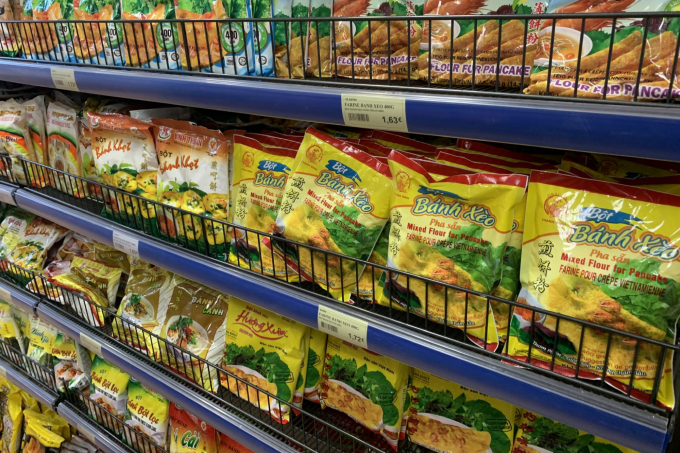
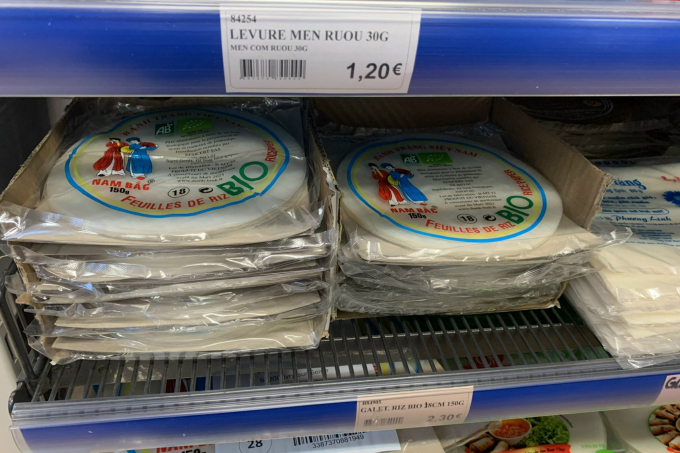
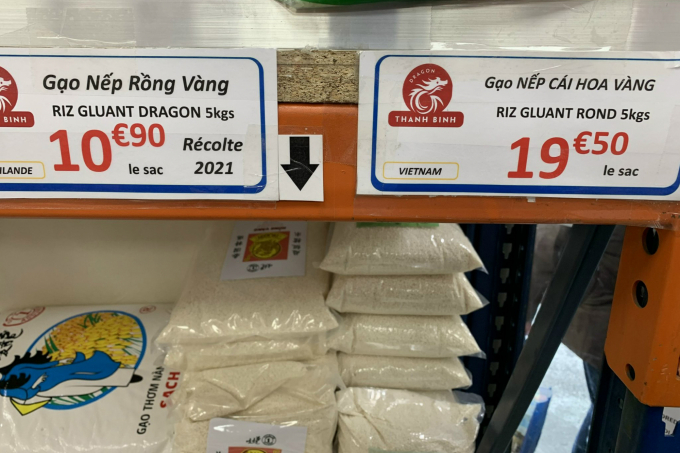
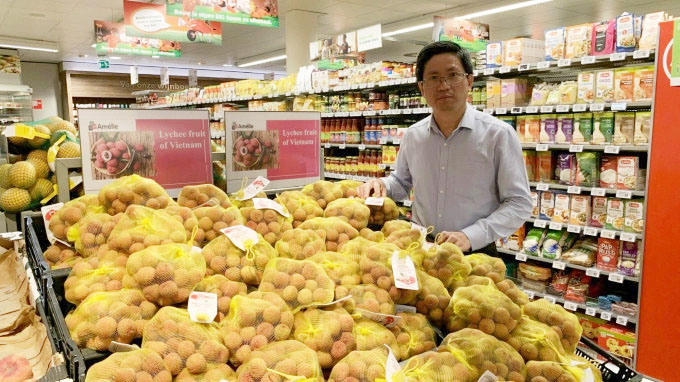
Vietnamese agricultural products are available on supermarket shelves in Belgium.
In an interview with Vietnam Agriculture News (VAN), Mr. Tran Van Cong, Vietnam's Agricultural Counselor in the EU, said: "We have the advantage of EVFTA and the majority of Vietnam's agricultural products and food products benefit from tax rates that are close to 0%”.
The world market is currently having some fluctuations, which factor significantly affects the global supply chain, and what difficulties will Vietnamese agricultural product exports to Europe face?
Vietnamese agricultural products are increasingly expanded in the European market owing to the advantages of EVFTA that other competitors do not have. Most agricultural product exports to the EU enjoy a 0% tax rate, which is also an advantage that Vietnam over other competitors even in ASEAN, America, and South Asia...
However, Vietnamese agricultural products and goods to Europe at this stage also face many difficulties.
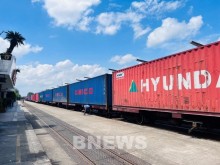
After the Covid-19 pandemic struck, logistics costs, especially freight rates from Vietnam to Europe, have increased by 8-10 times higher than before the pandemic. Shipping charges increased in all 3 categories including sea, air and rail. In addition to the high transportation cost, it is very difficult for agricultural product exporters to book shipments to the EU, due to the limited number of transport trips.
Moreover, we have the geographical disadvantage of distance from the Europe compared to other countries with similar agricultural products exporting to this market such as South America, the Middle East, Africa and some South Asian countries causing longer transit times, higher logistics costs.
Reports from other importers showed that, freight rates from South America, Africa to the EU is not as high as those from Asia to Europe. For example, the freight rate for transporting fresh fruit by air is only 1.2 to 3 USD/kg, while the freight rate for transporting fruit by air from Vietnam to the EU is about 7 to 10 USD/kg. kg. Sea freight rates also increased from 2-4 thousand USD to 12-16 thousand USD.
Even in the ASEAN region like Thailand, there are specific policies to prioritize the transportation of agricultural products, so their fresh fruits are also competitively priced in the EU market.
In addition, the transportation time is longer, delayed, and other logistics services are limited. This affects the quality of goods, especially agricultural products and fresh goods such as fresh vegetables, tubers, and fruits. Consequently, it affects product quality, distribution schedule, and credibility of Vietnamese exporters to EU importers.
Most Vietnamese agricultural products currently being exported to the EU enjoy a tax rate of 0%.
In addition to the transportation issues mentioned above, what are the other difficulties for Vietnamese agricultural products entering the European market?
With high demand for agricultural products from Vietnam, some groups of agricultural products from Vietnam to the EU occupy a proportion including cashew, seafood, coffee, pepper, and wooden furniture meeting the large-scale export demand.
However, many potential product groups such as vegetables, fruits, rice, and processed foods have not yet met the volume requirements by large EU orders for supermarket food channels in comparison with other exporting countries.
The number of Vietnamese fruit and vegetable exporters capable of meeting the EU's requirements and criteria is still low. The raw material area for vegetable and fruit production meeting GlobalGAP for export to the EU market is still very limited while the EU demand for tropical fruits and vegetables is increasing, thus preventing European businesses from switching to import fresh fruits and vegetables from Vietnam.
The EU continuously updates and increases the introduction of new SPS measures for imported agricultural products, including products of plant and animal origin, and strengthens the application of new criteria, certification associated with environmental protection, sustainable, safe, socially responsible development.
For agricultural products and food of animal origin (excluding aquatic products and a few types of meat), most meat products, eggs and dairy products have not been licensed for export to the EU and must go through a negotiation and evaluation process before accessing this market.
Vietnamese agricultural products have not been distributed widely in EU supermarket systems, they are mostly concentrated in Asian store systems, without strong and pervasive brands.
Trade promotion and image promotion of Vietnamese agricultural products are still limited. Packaging designs for agricultural and food products has not met requirements and appeals to European consumers.
Exporters of agricultural products and food are still limited in terms of capacity for foreign trade, negotiation, international transaction, payment, etc. in order to utilize EVFTA commitments, approach and conduct business with European partners.
Many Vietnamese agricultural products are superior to their competitors.
Despite the difficulties, it is important to note that supply disruptions and interruptions are also an opportunity for Vietnamese agricultural products to access many new markets, with less competition than the EU, what are you views on this issue?
In my opinion, the EU market opportunity open for all exporters because this market is currently recovering, opening services and attracting tourists, so it is attracting agricultural, forestry and fishery products, food to serve European consumers, as well as processing and re-exporting to other markets.
Vietnam has the advantage of EVFTA and from which, most of our agricultural, food products benefit because the tax rates are close to 0%.
Therefore, Vietnamese agricultural products have an advantage in tax rates over other competitors, including some countries enjoying GSP universal tariff preferences granted by the EU. Some EU products reserve a quota mechanism for Vietnam with a tax rate of 0%, which we need to fully utilize.
In addition, Vietnamese agricultural products are initially praised for their delicious tastes, many of which are even superior to other competitors'. Instead of direct competition, our agricultural products are complementary to that of the European market.
Many commodity groups such as cashew nuts, pepper, tiger shrimp, pangasius, rice, vermicelli, noodles, pho have great tax advantages and dominate the market, with a more competitive advantage.
Mr. Tran Van Cong, Vietnamese Agricultural Counselor in the EU.
During the present Russia-Ukraine conflict, the EU embargoes goods imported from Russia, so Vietnam has the advantage to take over Russia's market share of white fish, Minh Thai fish with our pangasius.
Thanks to the commitment to tax reduction within the EVFTA, updated information and timely support with procedures from the government of Vietnam and the EU, businesses are invested and utilize this opportunity to export goods to the EU.
There is a trend in that many businesses, including those belonging to European and overseas Vietnamese, are interested in importing goods from Vietnam. Notably, overseas Vietnamese businesses are looking for processed agricultural products originating from Vietnam to replace, distribute in Asian stores as well as enter European supermarkets.
As a result, Vietnam's agricultural products and foods will be able to compete in the European market, when we have handled difficulties including developing a standard raw material area that is sufficient in terms of scale, quantity, with cost reduction, logistics cost reduction, market development, product branding, product promotion and so on.
The current "Zero Covid" policy also affects food supplies from China, opening up opportunities for food from other countries to enter the EU market.
The EU market is always a large and potential market, an opportunity for Vietnamese agricultural products.
With these opportunities, would you please tell us how concerned should Vietnamese manufacturers and exporters be in meeting technical standards of the European market?
The EU market is always a large and potential market, with opportunities for Vietnamese agricultural products to enter the market. These products can have high selling prices and when introduced into the European market, they can cover other markets globally.
But the EU market has many competitors, it is always the strictest market in the world, not one where we can sell whatever we want to sell, so to exploit these opportunities well, our agricultural production sector needs to have more radical changes.
The production of agricultural products and food must guarantee all the standards and regulations starting from the stage of production such as seeds, input materials, farming and cultivation processes, farming and planting area codes according to EU's regulations, up until the stage of transportation, processing as well as export.
With such drastic changes, the added value and export value of new agricultural products will be high, ensuring efficiency of the production cycle, helping Vietnam enter a sustainable global supply chain.
In addition, we need to focus on restructuring agricultural production in chains, in which close links between cooperatives, businesses and farmers are required, forming a closed process from organizing to processing of raw material, ensuring traceability and food safety.
In short, businesses, cooperatives and farmers need to be informed of EU regulations in production and processing. We need to accelerate the application of certification standards widely applied in the EU market along with new environmental and social standards (GlobalGAP, MSC, ASC, Rainforest Alliance, UTZ, 4C, Fairtrade, Bio EU for FLEGT compliant furniture, anti-IUU in fishing, etc.).
Meanwhile, state agencies must cooperate with the EU to synchronize the standards both parties are applying. Products manufactured for export to the EU are of guaranteed quality, without exceeding the MRL threshold. Only then will agricultural products have good access to the EU market.
Thank you, Sir!
Translated by Nguyen Hai Long