Ancelotti Dismisses Japan's Mind Games Ahead of World Cup Clash
Brazil's manager Carlo Ancelotti has stated he will not engage in any psychological tactics from Japan ahead
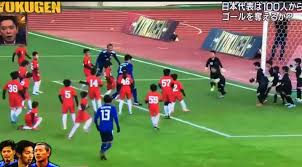
As the 2026 FIFA World Cup progresses, Japan's upcoming match against Brazil is generating significant interest. Japan's tactical approach, which has been likened to a memorable exercise where three international players faced off against 100 schoolchildren, could provide them with an edge against the historically dominant Brazilian team.
The exercise, which has gained popularity on social media, showcases how the Japanese players managed to maintain possession and pass effectively despite being surrounded by numerous opponents. By drawing defenders toward the ball, they were able to switch play to unmarked teammates, a tactic that has become a hallmark of their playing style.
Japan employs a 3-4-3 formation that creates a front five in possession, allowing them to exploit spaces and find spare players running into the box. This strategic positioning has proven effective in their previous matches, including a recent encounter against Sweden, where they demonstrated their ability to switch play rapidly and create scoring opportunities.
One of the key aspects of Japan's strategy lies in their wing-backs, who are not merely late arrivals but also capable of cutting inside to shoot or switch play with precision passes. This versatility adds another layer to their attacking threat.
As they prepare to face Brazil, Japan's tactical advantages become even more apparent. Brazil's full-backs, particularly Danilo and Douglas Santos, are seen as potential weaknesses. With Danilo nearing the end of his career and Santos lacking top-class performance, Japan's strategy of exploiting these areas could be crucial.
Moreover, Brazil's defensive setup may struggle to cope with Japan's dynamic attacking players, especially if they do not adjust their formation to counter Japan's front five. The tactical decisions made by Brazil's coach, Carlo Ancelotti, will be pivotal in determining the outcome of this match.
This match is not just significant for the tournament but also for the broader context of World Cup history. Japan has long been viewed as a rising force in international football, possessing the infrastructure and technical skills to compete at the highest level. However, they have yet to win a knockout game in World Cup history. Eliminating Brazil, a team with an illustrious World Cup legacy, would mark a monumental achievement for Japan.
As the match approaches, all eyes will be on Japan's tactical execution and whether they can turn their innovative strategies into a historic victory over Brazil.