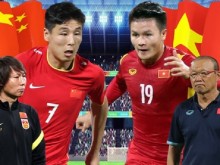
Brazil Tops World Cup Group C, Awaiting Next Opponent
Brazil has secured the top position in Group C of the World Cup 2026 after a decisive 3-0 victory over
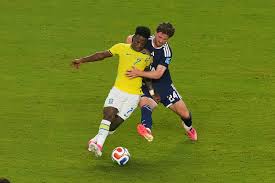
The 2026 World Cup has introduced a unique structure that places teams from Groups C, F, H, and J at a disadvantage in the Round of 16. While teams that topped Groups A, B, D, E, G, I, K, and L will face one of the eight third-placed teams, those leading Groups C, F, H, and J must contend with second-placed teams.
This regulation was established by FIFA well in advance of the group draw held in December 2025. According to Section 12 of the World Cup 2026 regulations, FIFA predetermined the matchups: the winner of Group C will face the runner-up of Group F, the winner of Group F will meet the runner-up of Group C, the winner of Group H will play against the runner-up of Group J, and the winner of Group J will take on the runner-up of Group H.
This arrangement means that teams from Groups C, F, H, and J are at a disadvantage as they do not benefit from facing a third-placed team. For instance, Brazil, which topped Group C, will encounter a formidable opponent in Japan during the Round of 16. Similarly, the Asian representative Japan is also at a disadvantage, having been placed in Group F.
In another example, the Netherlands, which won Group F, will face Morocco, a second-placed team that reached the semifinals in the previous tournament. Argentina, the leader of Group J, is likely to meet Uruguay, the runner-up of Group H, in the knockout stage. The second-placed team from Group J, currently Austria, will also face the winner of Group H, which could be Spain.
Regardless of their strength, teams from Groups C, F, H, and J will face tougher challenges than those from other groups. In contrast, Canada, which finished second in Group B, has a relatively easier path, as it will face the runner-up of Group A, South Africa, instead of a stronger opponent like Mexico.
The root of this imbalance lies in the World Cup 2026's structure, which features 48 teams divided into 12 groups of four. After the group stage, 32 teams will advance, including 12 group winners, 12 runners-up, and eight third-placed teams with the best records. Since only eight teams can be third-placed, the remaining four group winners must face second-placed teams.
This explains why only eight groups are allowed to meet third-placed teams, but it raises a more significant question: why did FIFA select Groups C, F, H, and J for this arrangement? According to Match-Later, identifying these specific groups was essential for FIFA to develop Appendix C of the regulations, which contains 495 different scenarios for third-placed teams. Changing these four groups after the draw would require a complete redesign of the matchups.
Each disadvantaged group belongs to a set of three groups in alphabetical order. For example, Groups A, B, and C have Group C at a disadvantage, while Groups D, E, and F have Group F. Similarly, Groups G, H, and I have Group H, and Groups J, K, and L have Group J. This structure ensures a balanced schedule, preventing any team from having significantly more rest days than their opponent in the Round of 16.
Additionally, the three host teams of the 2026 World Cup—Mexico, Canada, and the USA—are not placed in Groups A, B, or C but rather in A, B, and D. This placement allows them to avoid being in a disadvantaged group. As a result, neutral fans can look forward to exciting matchups right from the Round of 16, such as Brazil versus Japan or the Netherlands versus Morocco. The potential for thrilling encounters, including Spain against Austria or Argentina against Uruguay, suggests that the most captivating matches may emerge from Groups C, F, H, and J.